


Finding a replacement part for an older mold often starts with an incomplete description: a worn bush, a damaged pin, or a clamp that no longer holds properly. You may know exactly where the part belongs and still have very little information a supplier can use.
That's where I would start-with the information already attached to the mold. Ordering becomes much easier once you can identify the tooling and explain what the replacement needs to do.
- Find out what you actually have
Look for a manufacturer's plate, serial number, drawing reference, or any markings on the component itself. Old invoices and maintenance records are worth checking before you spend hours searching online. They may contain a part number that never appears on the mold.
The product name gives you some context. If you have a ballistic helmet mold, for example, knowing the helmet style helps describe the tooling. It still won't tell you the dimensions or material of a particular locating pin. Two molds producing similar helmets may have quite different assemblies.
Previous repairs can complicate things. A component fitted years ago may already be a replacement, so don't assume everything currently installed matches the original design.
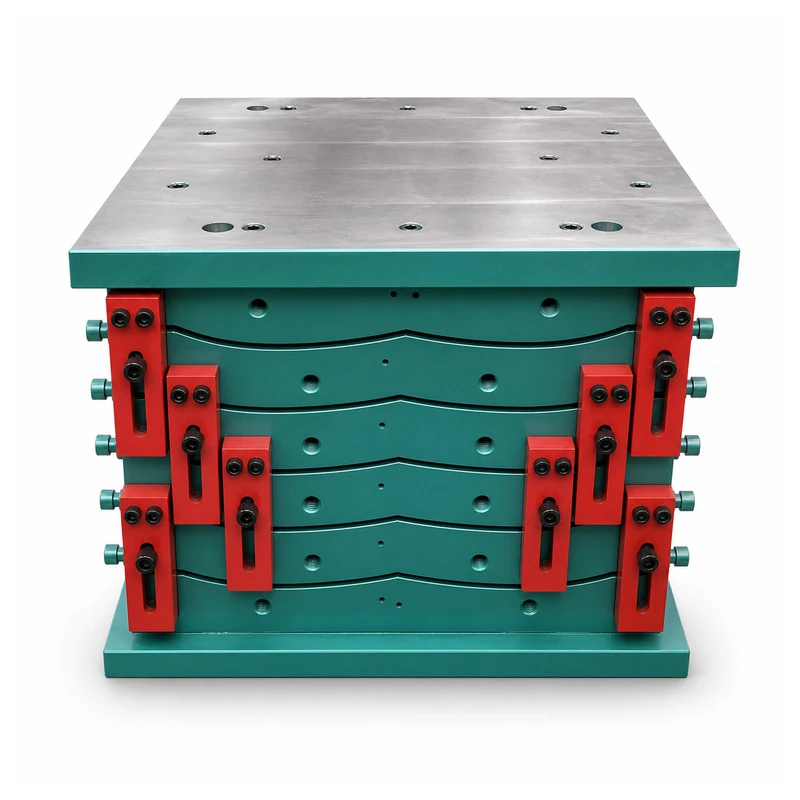
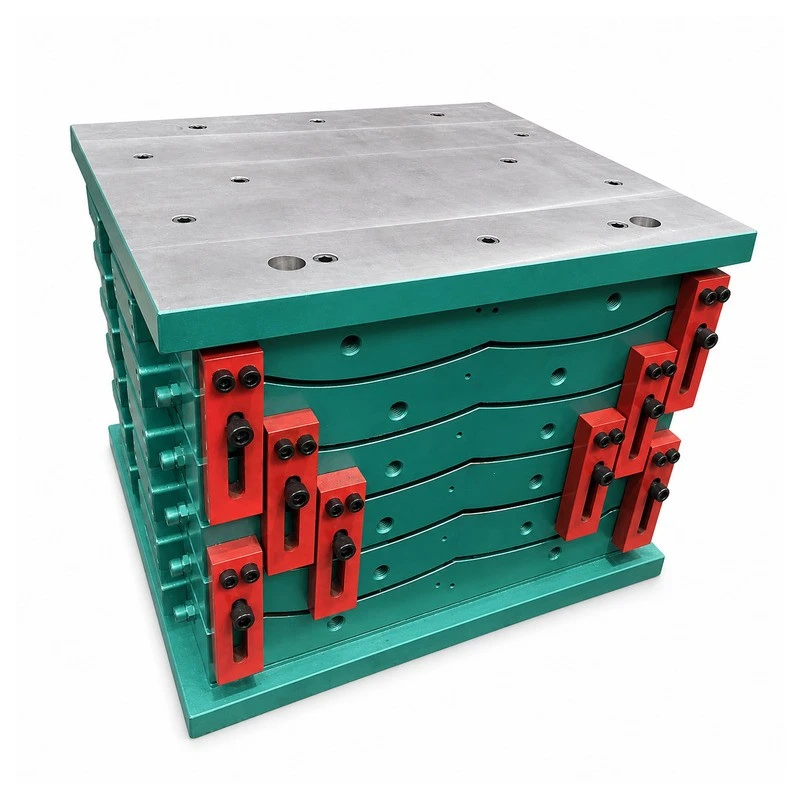
If the identification plate is missing, take photographs of the complete mold, the part in position, and the surrounding assembly. A supplier needs to see how the component fits into the tooling. A close-up of a loose metal piece leaves a lot unanswered.
- Give the supplier something useful to work with
Before removing anything, have qualified personnel follow the equipment's maintenance and energy-isolation procedures. Turning off the heater alone does not make the assembly safe to dismantle; pressure, stored energy, and residual heat also need to be addressed.
Once inspection is safe, record the relevant dimensions and markings. For threaded parts, include the thread specification if it can be established. Explain what has gone wrong, too. Has the component worn unevenly? Is it cracked? Does it bind during movement?
Those details matter because the old part may no longer represent the correct dimensions. Measuring a worn bore tells you its current size, which may differ from the size required for a new component.
I would send the photos, measurements, and available records together in one enquiry. It saves the supplier from trying to identify a part through several rounds of short messages, each adding another missing detail.
- Start with the original maker, then widen the search
If the mold manufacturer is still operating, contact it first. Ask whether it can identify the assembly from the serial number and whether drawings or replacement specifications remain available.
A discontinued part number can still be useful. Even when the original maker cannot supply the component, its documentation may give another supplier enough information to assess a replacement.
From there, try established mold-component suppliers and tooling repair companies. Some components may be standard parts. Others will need to be sourced or manufactured specifically for the mold.
There's no reason to reject a standard component simply because the tooling is old. What matters is whether its dimensions, tolerances, material, and other relevant specifications meet the design requirements.
Used equipment is another possible source, although matching appearances are only a starting point. A part removed from a similar mold may have its own wear or repair history.
- Ask what "compatible" means
A supplier saying "this should fit" leaves an important question open: what has actually been checked?
For a simple component, the supporting information may be straightforward. Other parts need confirmation of heat treatment, hardness, surface finish, or operating limits. The requirements depend on the component's function.
This is particularly relevant when sourcing parts for a [ballistic plate mold](/compression-mold/ballistic-mold/ballistic-plate-mold.html). The shape of the finished plate does not tell you enough about the tooling or the material system being processed. Work from the drawings and approved process information wherever they are available.
Be precise about the application when searching, too. Listings for a riot shield mold or an anti-riot suit mold may look related, but riot-control protection does not automatically mean bullet resistance. Similar product descriptions are not evidence that the tooling components are interchangeable.
- When a custom replacement makes sense
Sometimes the search ends without a suitable off-the-shelf part. At that point, a tooling specialist can assess whether making a replacement is practical.
Original drawings are the best reference. If you only have the old part, explain its condition before asking someone to copy it. A scan can capture the existing geometry, including wear or distortion. It cannot establish the original material specification or recover a missing tolerance.
Ask for a quote that covers the engineering and inspection work as well as machining. Then compare the full cost with repairing the existing assembly or replacing the tooling. A cheap machining quote can be misleading if substantial investigation is still needed.
After installation, follow the appropriate inspection and return-to-service process. A part fitting into place is encouraging, but further checks may be needed before production resumes. Where a repair could affect the finished product's protective performance, the applicable quality review and testing still need to be completed.
Keep the final part number, drawing, supplier details, and inspection record together. Once you have found and verified a replacement, that information is worth preserving. It gives the next person who works on the mold a much better starting point.
References
- Defense Trade Advisory Group. (2001). Vintage Ballistic Mold Parts Compatibility Standards. U.S. Department of Defense, Office of Local Defense Community Cooperation.
- Mold Making & Design Association. (2018). Precision Replacement Parts for Specialized Compression Molds. MD&A International Conference Proceedings.
- ARCOM Defense Surplus. (2022). Vintage Ballistic Gear Parts Harvest Guide. ARCOM Retail Publications.