


SMC molded parts can be flame retardant, but that performance comes primarily from the material formulation. Using an SMC compression mold does not, by itself, make a part fire resistant.
That distinction matters when ordering tooling. A drawing may specify the shape, dimensions, and surface finish in detail, yet describe the fire requirement with just two words: "fire resistant." Before a mold project moves forward, that requirement needs a clearer definition.
Which material will be used? What thickness has been tested? Which standard applies to the finished product?
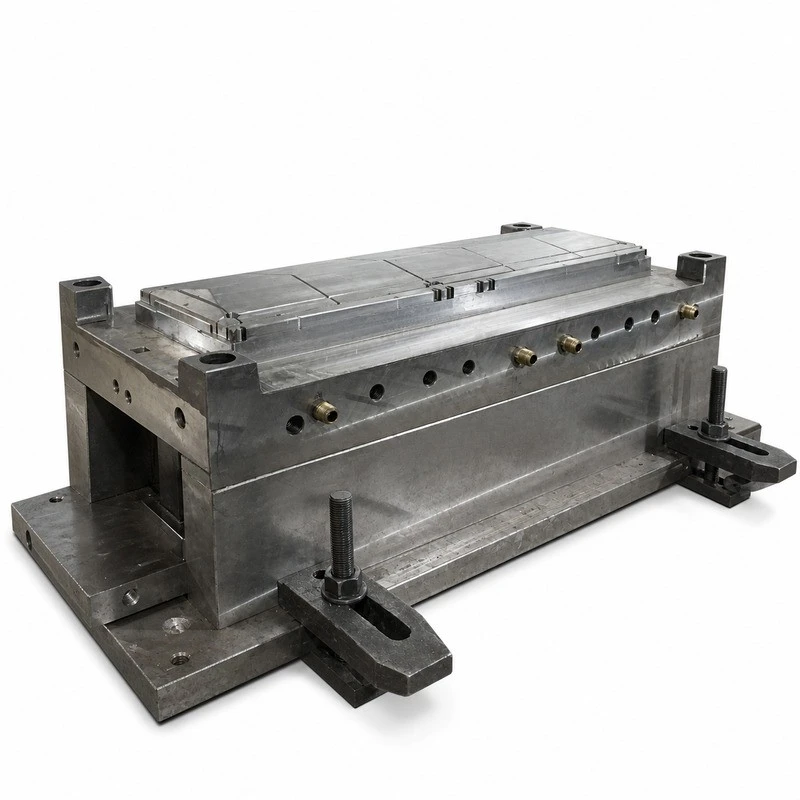
We manufacture compression molds. From that perspective, the useful question is how the selected material, part design, and molding process work together-and what still needs to be verified through testing.
What Determines Whether SMC Is Flame Retardant?
SMC stands for Sheet Molding Compound. It is a thermosetting composite containing resin, reinforcing fibers, fillers, and other ingredients. The compound is supplied before final curing and formed into a finished part using heat and pressure. Different formulations are developed for different performance requirements. IDI Composites explains the composition of SMC and BMC here.
The name "SMC" therefore does not tell you the material's fire performance. Two compounds suitable for similar-looking parts may have different burning characteristics.
Flame-retardant formulations can use additives and fillers to influence those characteristics. Aluminum hydroxide, for example, is used as a flame-retardant filler in thermoset composites. That does not mean adding it to any compound will automatically deliver a particular rating. The complete formulation still needs to be evaluated. See Huber's information on aluminum hydroxide for composites.
For a buyer, the practical starting point is the exact material grade and its supporting test data.
"Flame Retardant" and "Fire Resistant" Describe Different Things
People often use these terms interchangeably, but a technical specification needs to be more precise.
Flame retardancy concerns burning behavior, such as whether a specimen stops burning after an ignition source is removed under defined test conditions.
Fire resistance, particularly in construction specifications, can refer to how long a component or assembly maintains functions such as integrity, insulation, or load-bearing capacity during fire exposure.
A material that self-extinguishes in a small-scale test has not necessarily demonstrated that an enclosure will remain intact during a prolonged fire.
For example, an electrical housing specification might call for a particular material flammability classification. A building application may require a different evaluation of the installed product or assembly. The intended use determines what evidence is needed.
What a UL 94 V-0 Rating Actually Tells You
UL 94 is a common reference when discussing the flammability of plastic materials used in devices and appliances.
For the V-0 classification, individual afterflame times must not exceed 10 seconds after either flame application. There are additional requirements, including limits on total afterflame time and afterglow, and whether flaming particles ignite cotton below the specimen.
V-0 is a demanding classification within the V-0, V-1, and V-2 vertical test group. UL 94 also includes 5VA and 5VB classifications using a more severe ignition source. UL Solutions provides the test criteria and explains the different classifications.
When reviewing a material claim, ask for the tested grade, thickness, and applicable report or recognition details. "V-0 material" alone is incomplete information.
Also, UL 94 does not establish an hourly fire-resistance rating or evaluate smoke characteristics and heat release rate. A material classification cannot replace every test required for the finished application. UL explains these limits in the standard's scope.
Where Compression Mold Design Makes a Difference
Once the material is selected, the tooling must suit its processing requirements.
The mold's role is to help produce consistent parts. Several design considerations deserve attention.
Heating and temperature control
The mold needs a heating arrangement appropriate to the compound, part geometry, and production process. Uneven temperature can create differences in material flow and curing across a part.
Precision machining is valuable, but it does not automatically create a uniform mold temperature. Heating layout, temperature sensing, and process control also matter.
Venting and cavity filling
Air must be able to escape as the compound fills the cavity. Venting, material placement, and closing conditions all influence the result.
This is especially relevant around ribs, corners, and other areas where filling can become difficult. The aim is to reduce molding defects and produce the intended geometry consistently.
Wall thickness and tooling stiffness
The mold must support the specified dimensions under production conditions. Its stiffness, the press setup, and the material charge all contribute to achieving consistent part thickness.
Thickness also matters when reviewing material flammability data. A result obtained at one specimen thickness should not be assumed to cover every thickness used in a new design.
These considerations belong to a broader process involving the material, mold, press, and operating conditions. The American Composites Manufacturers Association's SMC compression molding guidance likewise treats material quality and process control as connected issues.
Good tooling supports repeatable production. It does not independently establish a fire rating.
What to Confirm Before Ordering an SMC Compression Mold
If your part has a flame-retardancy requirement, it helps to bring that information into the tooling discussion early.
Prepare the following:
The intended application: What does the part do, and where will it be installed?
The applicable requirement: Provide the standard and target classification rather than only the phrase "fire resistant."
The selected material: Share the compound grade, supplier, and processing recommendations.
The part drawing: Identify wall thicknesses, critical dimensions, ribs, inserts, and assembly features.
The supporting test information: Check what material and specimen conditions the available results actually cover.
The production conditions: Include relevant press specifications and the planned molding process.
Consider an SMC electrical enclosure. Its wall thickness, openings, inserts, and assembly details should be reviewed alongside the material requirement. Choosing a compound with suitable test data is an important step, but the finished design may still need its own verification.
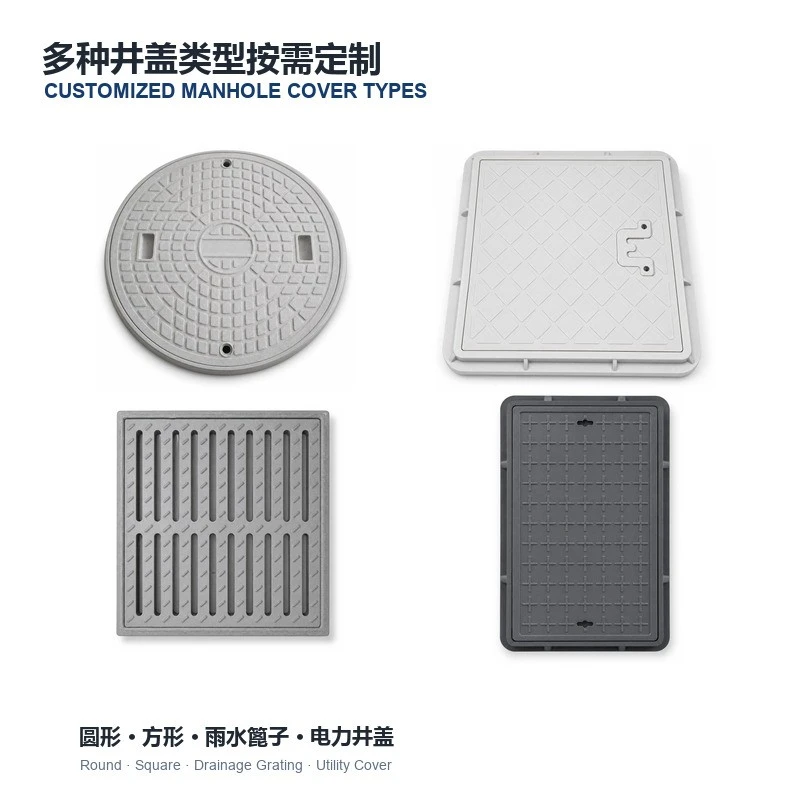
A water tank panel or manhole cover should be assessed against its own application requirements. A fire-related requirement from one project should not be transferred automatically to another product simply because both use SMC.
A Few Questions Worth Clearing Up
Does cured SMC melt when exposed to fire?
Conventional cured SMC is a thermoset. It does not remelt and flow like a thermoplastic. Severe heat can still cause decomposition, charring, cracking, burning, and loss of mechanical performance. Mettler Toledo explains the distinction between thermosets and thermoplastics.
Does a higher oxygen index guarantee better performance in a real fire?
An oxygen index result describes behavior under a specified laboratory method. It should not be treated as a guarantee of self-extinguishing time, a particular flammability classification, or performance in every fire scenario. ISO describes what the oxygen index test measures.
Can the mold manufacturer guarantee that the finished part is flame retardant?
A mold alone cannot provide that guarantee. The material grade, part design, processing conditions, and applicable test results must be considered together. Tooling acceptance and fire-performance verification should each have clear requirements.
Planning a Mold for a Part with Flame-Retardancy Requirements?
Before requesting a quotation, gather the part drawing, proposed SMC grade, and required fire-performance standard. If the material has not been selected, confirm a suitable grade with the compound supplier.
We manufacture compression molds. Sharing the material and application requirements at the beginning gives the tooling project a clearer starting point.
To discuss an SMC compression mold, send us your drawing, material information, and press specifications. Include any flame-retardancy requirement so it can be considered during the tooling review.
References
- Underwriters Laboratories. (2021). Standard for Safety of Flammability of Plastic Materials for Parts in Devices and Appliances (UL 94). Northbrook, IL: UL LLC.
- American Composites Manufacturers Association. (2022). "Flame Retardancy in Thermoset Composites: A Guide for Specifiers." Arlington, VA: ACMA.
- International Code Council. (2023). International Building Code (IBC) Chapter 7: Fire and Smoke Protection Features. Country Club Hills, IL: ICC.
- European Chemicals Agency. (2022). Regulation (EC) No 1907/2006 (REACH) Annex XIV: Authorisation List of Substances of Very High Concern. Helsinki, Finland: ECHA.