


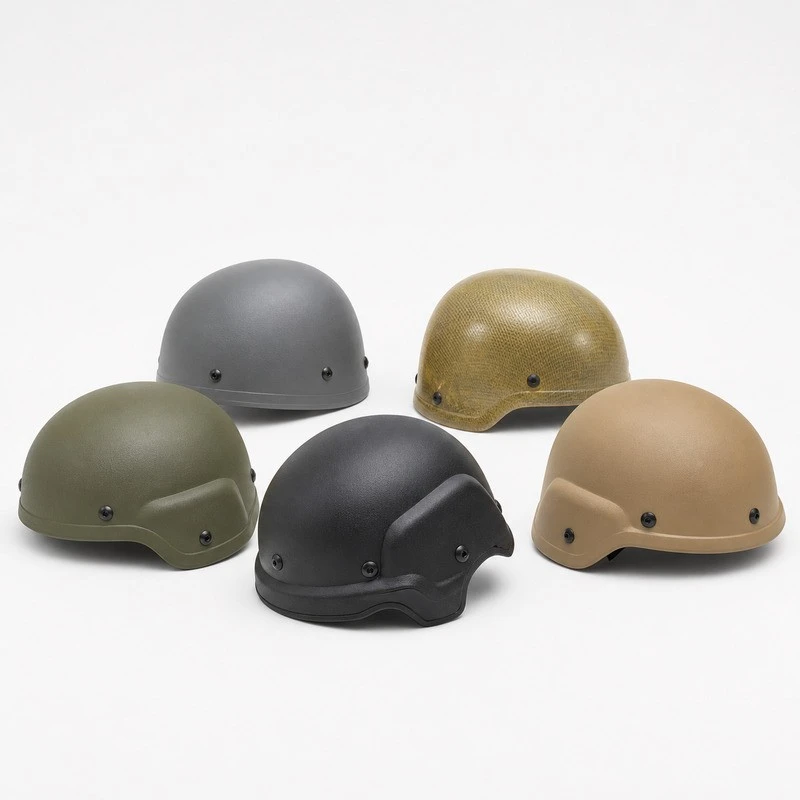
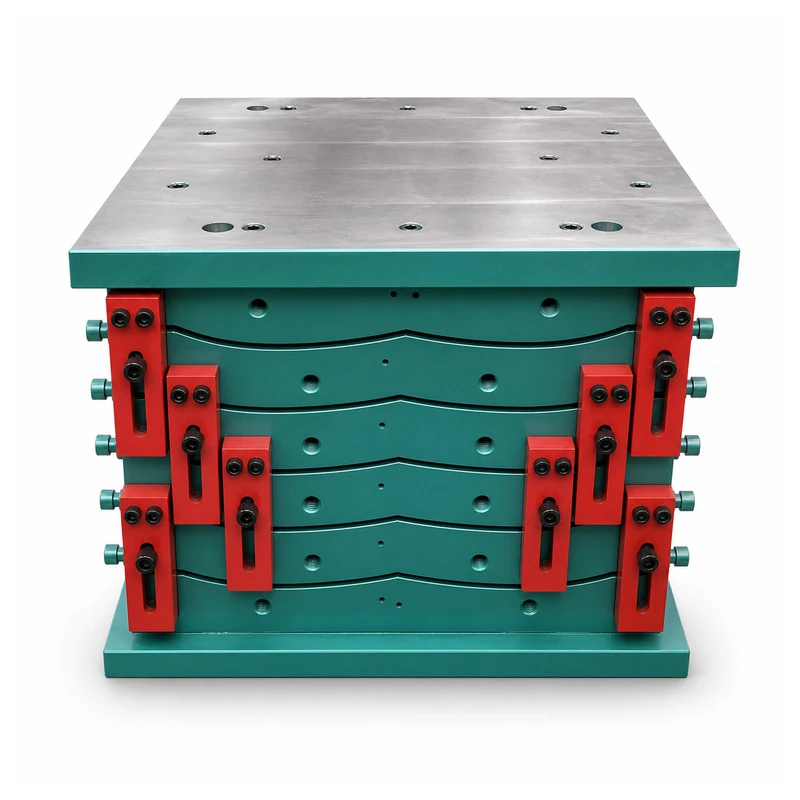
A two-cavity ballistic compression mold is a tool designed to form two protective components during one press cycle. For the steel molds discussed here, the two cavities produce identical parts: either two ballistic helmet shells or two composite armor plates of the same design and size.
The appeal is straightforward. Producing two parts per cycle can increase output from a suitable press. Whether that increase makes a worthwhile difference, however, depends on the complete production process-from preparing the material to removing and inspecting the molded parts.
What Does "Two-Cavity" Mean?
In compression molding, prepared material is placed into the mold and formed under controlled pressure and temperature. The mold's working surfaces define the component's shape.
A two-cavity mold, also called a double-cavity mold, provides two separate forming positions within the tooling assembly. Each position has the corresponding mold surfaces needed to form one complete part.
The upper and lower halves should not be confused with two cavities. A mold with an upper half and a lower half may still produce only one part per cycle. The cavity count refers to the number of separate parts the mold is configured to form.
Our two-cavity ballistic compression molds use steel tooling and are intended to produce two matching helmet shells or plates in each cycle.
How Does a Two-Cavity Mold Affect Production Output?
The main benefit is more parts per press cycle.
If a single-cavity mold produces one part and a two-cavity mold produces two, the theoretical output doubles when the complete cycle time remains unchanged. That is a useful starting point for a capacity estimate, but actual production needs a closer look.
Two preforms must be prepared and loaded. Two molded parts must be removed. Cleaning, inspection, and any release-agent application also need to fit into the working sequence. These operations can affect the time between press cycles.
The material's required forming, consolidation, or cooling time does not automatically become shorter because a second cavity has been added.
For a meaningful comparison, measure acceptable parts per hour under normal production conditions. That figure captures the benefit more accurately than cavity count alone.
A dual-cavity arrangement is particularly worth evaluating when press time is the production bottleneck. If material preparation or downstream finishing already limits output, adding a cavity may simply move the queue to another operation.
Can a Two-Cavity Mold Use the Existing Press?
Sometimes it can. The existing press needs to be checked against the proposed mold and process.
For a side-by-side layout with two identical cavities, the total effective molding area increases. Maintaining the same molding pressure across that larger area generally requires more total press force. Available tonnage is therefore one of the first items to review.
Physical fit matters too. The mold must fit the press table, opening height, mounting arrangement, and loading space. Its weight and handling requirements should also suit the equipment.
Pressure distribution deserves attention alongside total force. A press may have sufficient rated capacity while the combined press-and-mold system still needs improvement in parallelism, support, or resistance to deflection.
Heating and cooling capacity must be considered as well. The thermal system needs to serve both cavities within the required process window.
These checks help establish whether a two-cavity mold can work on the current machine or whether equipment changes are needed.
How Do Helmet Molds and Plate Molds Differ?
Both applications can use two-cavity compression tooling, but their geometry and material requirements lead to different design decisions.
Ballistic Helmet Compression Molds
A helmet shell has a deep, curved shape. The tooling must accommodate the intended preform, control the molded geometry, and allow the shell to be removed without damage.
Part thickness, edge geometry, surface requirements, and access for loading all need to be considered. The release arrangement must suit the shell shape and the material system.
For a two-cavity helmet mold, both forming positions need to meet the same agreed requirements. Matching the nominal cavity dimensions is only one part of achieving that result.
Ballistic Plate Compression Molds
A ballistic plate mold may need to form a flat, single-curved, or multi-curved component, depending on the product design.
The mold must suit the plate outline, curvature, thickness requirements, and specified material construction. Different composite systems can require different thermal and pressing sequences, so a mold should be designed around the actual material specification.
Our two-cavity plate molds are configured for two plates of the same specification per cycle. Producing different sizes or shapes together would require a separate assessment.
How Is Consistency Maintained Between the Two Cavities?
Sharing a press cycle gives the two parts a common operating sequence. It does not prove that the conditions inside both cavities are identical.
Differences can come from material placement, preform variation, local temperatures, tooling deflection, or wear. A small difference that is difficult to notice during loading may become visible after molding.
The design and validation work should therefore address both cavities individually. Relevant checks include cavity geometry, temperature distribution, pressure distribution, and the dimensions and condition of the molded parts.
Material preparation remains important. Two matching cavities cannot compensate for different layups or inconsistent loading.
During production, identifying parts by cavity helps reveal patterns. If a dimensional issue repeatedly appears in parts from one cavity, that information gives the team a more useful starting point for investigation.
Inspection should follow the established quality plan and cover both cavities. Cavity count alone is not a reason to reduce checking.
The mold supports repeatable manufacturing; the finished helmet or plate still needs to meet the applicable product and ballistic testing requirements.
When Is a Two-Cavity Mold Worth the Investment?
A two-cavity mold is worth considering when there is sustained demand for the same product, suitable press capacity, and a production sequence that can handle two parts at a time.
There is no universal monthly volume at which it becomes the better choice.
Compare the additional tooling cost with the expected output, labor requirements, energy use, maintenance, and acceptable-part yield. Use the same assumptions for both the single-cavity and two-cavity options.
A single-cavity mold may remain practical for development work, frequently changing designs, or a press with limited capacity. For repeat orders with a stable specification, a two-cavity design may offer a useful increase in production capacity.
What Should You Provide When Requesting a Quote?
A drawing and a target quantity are a helpful start. A more complete specification allows the tooling proposal to address the production conditions.
Prepare the following information where available:
Part drawings or 3D models, including size and curvature.
Material specification and preform or laminate details.
Critical dimensions, surface requirements, and acceptance criteria.
Press force, table dimensions, opening height, and mounting details.
Available heating and cooling systems.
Target output and the current production sequence, if one exists.
We manufacture steel compression molds for ballistic helmet shells and composite armor plates, including two-cavity configurations for identical parts. Send us your drawings, material details, press specifications, and production target to discuss a mold suited to your application.
References
- National Institute of Justice. (2021). Ballistic Protective Equipment Manufacturing Standards. U.S. Department of Justice.
- Ultra-High-Molecular-Weight Polyethylene (UHMWPE) Material Properties for Ballistic Applications. (2022). Journal of Protective Materials, 8(2), 45-62.
- Injection Molding vs. Compression Molding for Ballistic Composites. (2023). Manufacturing Engineering Association Report, 112-118.
- Mold Design Optimization for Multi-Cavity Ballistic Components. (2022). International Journal of Advanced Manufacturing Technology, 120(3-4), 987-1001.