


If you've ever stood on a production floor for a riot gear manufacturer, you'll know the anti riot suit isn't just fabric and padding-it's a system designed to turn everyday workers into frontline protectors. And every part of that suit starts with a mold. As a supplier specializing in custom compression molds for ballistic and protective gear, I've sat through more late-night design meetings with gear engineers than I can count, where the question that always comes up isn't just "what does this suit need to stop?" but "what does the mold need to do to make that suit work?" The safety features of an anti riot suit mold aren't just about shaping plastic or composite parts-they're about preventing defects that could get someone hurt when they're pushing through a crowd or blocking a projectile.
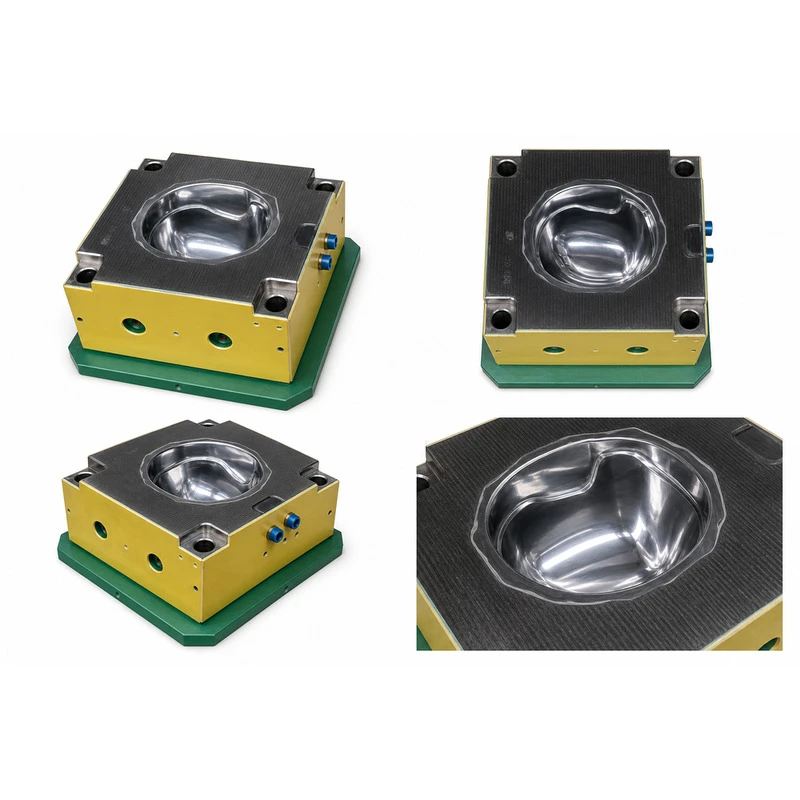
First, let's get one thing straight: a bad mold can ruin a perfectly designed suit. Last year, I heard from a gear maker that had a batch of anti riot suits where the protective shoulder panels had thin, uneven walls. The mold they were using had a poorly calibrated cavity that let the composite resin pool too thick in some spots and too thin in others. During a riot, a single strike to that thin shoulder area could cause a fracture or worse. That's why the first non-negotiable safety feature for any anti riot suit mold is consistent cavity tolerance, measured. For protective gear, every millimeter matters. The mold's core and cavity blocks can't warp after a few uses-even a tiny shift in alignment can create weak points in the suit's hard components. That's why we use pre-hardened tool steel for our molds; it retains its shape through thousands of compression cycles, so every anti riot suit part that comes off the line meets the same safety standard, no exceptions.
Next, the mold's venting system is a make-or-break safety detail, especially for molds used with high-density ballistic composites. If there's no proper venting, trapped air pockets form during the compression process. These air pockets leave voids in the suit's protective plates, vests, or shoulder guards-voids that act like gaps in a shield when a blunt force or projectile hits. I've worked on riot shield molds before, and the same venting rule applies there: the vents can't be too small (they won't release air) or too large (they'll trap material or leave rough edges). For anti riot suit molds, we design professional-vent channels along the edges of the cavity and around any sharp contours, like the seams where a hard chest plate meets flexible fabric panels. This keeps voids out, so the suit's protective components are solid, not porous, when they're deployed.
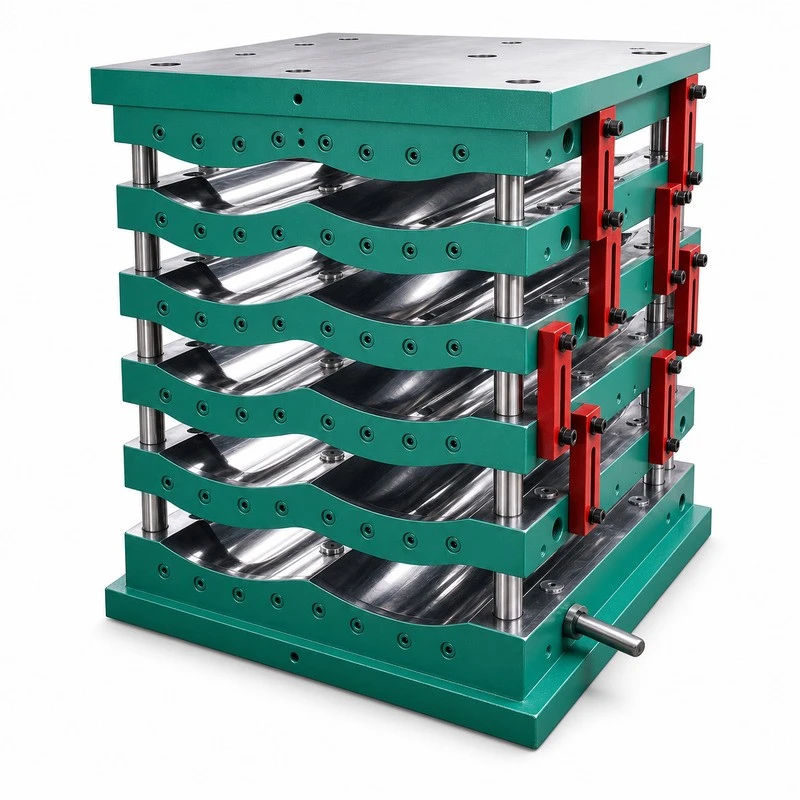
Speaking of components, an anti riot suit isn't just one part-it's a system of interlocking pieces: chest plates, shoulder guards, neck collars, and sometimes ballistic plates for extra protection. That's why a mold for an anti riot suit can't be a one-size-fits-all single unit. The safety feature here is modular mold design. When a mold is modular, you can swap out individual cavity inserts for different sizes or shapes without reworking the entire mold. For example, if a law enforcement agency needs anti riot suits for different body types (from small officers to large tactical personnel), or if they want to upgrade from standard protective plates to thicker ones, you don't need to build a whole new mold. This isn't just convenient for production-it's a safety win. A poorly fitted suit, with a shoulder guard that's too small or a chest plate that leaves a gap at the waist, is just as dangerous as a suit with a structural defect. Modular molds let manufacturers adjust parts quickly to meet specific safety requirements, so every suit fits correctly when it matters most. We build our anti riot suit molds with this modularity in mind, and if you want to see how we tailor these designs for different gear components, you can check out our page for anti riot suit molds here.
Another critical safety feature is the mold's release mechanism, specifically for parts that combine rigid and flexible materials. Anti riot suits often have hard plastic or composite protective shells over neoprene or fabric lining. We use a combination of ejector pins and air-assisted release for our anti riot suit molds: small, evenly spaced ejector pins that don't punch through delicate lining materials, and a low-pressure air blast that lifts the part away from the cavity without sticking. This is a detail you might not notice when looking at a mold, but it's what prevents a small tear in a suit's neck collar from becoming a gap that lets a blunt force hit the officer's neck during a confrontation.
Let's not forget about engineering design for the mold itself, because a mold is only effective if the people operating it can use it safely. Anti riot suit molds are heavy-some of them weigh over a ton-and they require frequent loading and unloading of materials. If the mold's lifting points aren't designed properly, or if it has sharp edges that can cut an operator, that's a workplace safety hazard that leads to delays and staff injuries. We add reinforced lifting lugs rated for twice the mold's weight and safety interlocks that prevent the mold from closing when an operator is inside the cavity. These small design choices might not seem related to the suit's end user, but if an operator gets hurt on the production floor, there's no one to make the suits that keep frontline workers safe. It's a circular safety issue, and it's one we take seriously.
Now, let's address a common misconception: some manufacturers think a basic mold for anti riot suits is enough, but gear that fails during deployment is a liability for everyone involved. We've seen it in the news: riots where protective gear failed, and officers or protesters were injured because a protective component cracked. That failure almost always traces back to a mold defect-whether it's a void in the material, an uneven part, or a poorly fitted component. The safety features of an anti riot suit mold don't just benefit the manufacturer; they benefit the people who rely on that gear to stay safe.
If you're a gear manufacturer looking to upgrade your mold capabilities, or if you're a law enforcement agency looking to ensure your anti riot suits meet the highest safety standards, we're here to help. Our team has over a decade of experience designing and building custom molds for ballistic gear, from riot shield molds to ballistic plate molds, and we work closely with clients to tailor every mold to their specific needs. Whether you're producing a small batch of suits for a local department or large-scale gear for a national agency, we can build a mold that prioritizes safety, consistency, and durability.
If you'd like to discuss your project, or learn more about how our molds can improve the safety of your anti riot suits, please don't hesitate to reach out to our team. We're ready to collaborate to find the right solution for your needs.
References:
- National Institute of Justice (NIJ). (2021). Ballistic Protective Equipment Standards for Law Enforcement. U.S. Department of Justice.
- Society of Plastics Engineers (SPE). (2020). Compression Molding for Protective Composite Parts. SPE Annual Technical Conference Proceedings.
- International Association of Chiefs of Police (IACP). (2022. Safety Guidelines for Riot Gear Production and Testing. IACP Law Enforcement Technology Report.