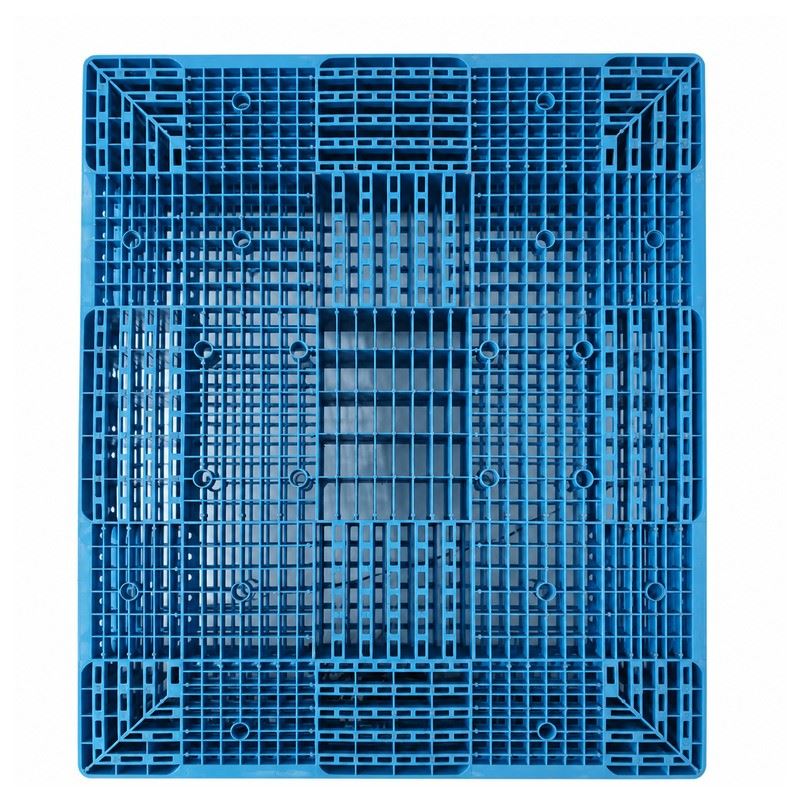

1. Mold Parting Line Design: Given the large dimensions of the pallet, a multi-parting-line structure is adopted to facilitate easier demolding and reduce mold wear. For instance, lateral core-pulling mechanisms are used to handle edge ribs or holes, preventing structural damage that might otherwise occur during direct mold opening.
2. Cavity Count and Arrangement: Multi-cavity molds utilize a horizontal layout to optimize space; combined with high-precision machining equipment such as CNC milling machines, this ensures dimensional consistency across all cavities. For example, 32 CNC milling units can simultaneously machine mold components, thereby boosting production efficiency.
3. Materials and Heat Treatment: The mold body is typically made of high-hardness alloy steel. After quenching and tempering, the hardness reaches HRC 48–52, enabling it to withstand the wear associated with long-term, high-pressure injection molding. Surface treatments such as chrome plating or nitriding can further enhance corrosion resistance.
4. Quality Standards and Inspection: In accordance with ISO 9001 standards, mold cavity dimensional accuracy is verified using a Coordinate Measuring Machine (CMM) to ensure pallet thickness deviations remain within ±0.1 mm. During the mold trial phase, continuous production of over 1,000 units is required to validate the mold's stability and service life.