


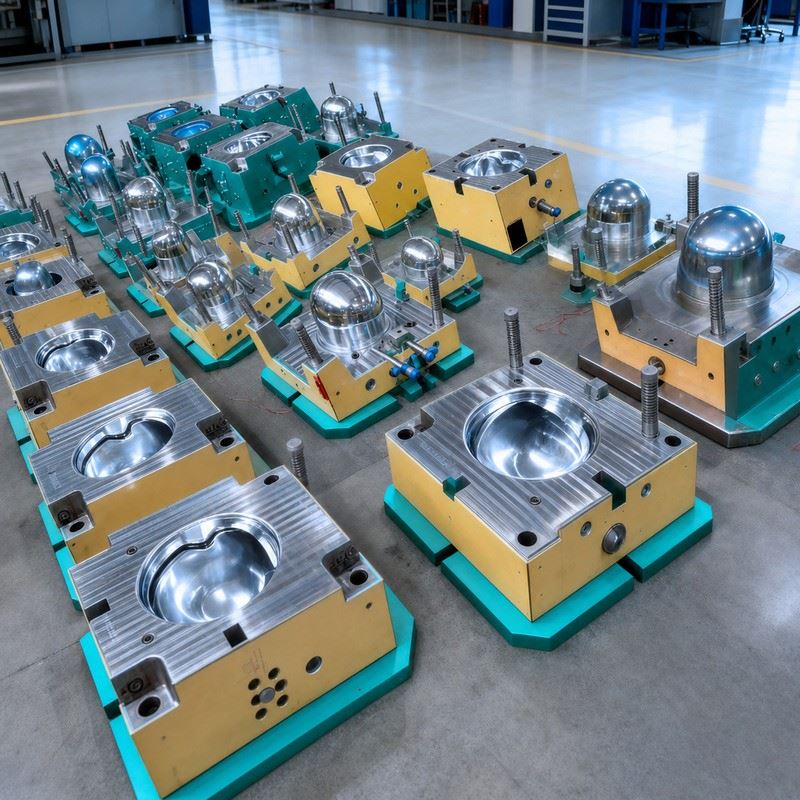
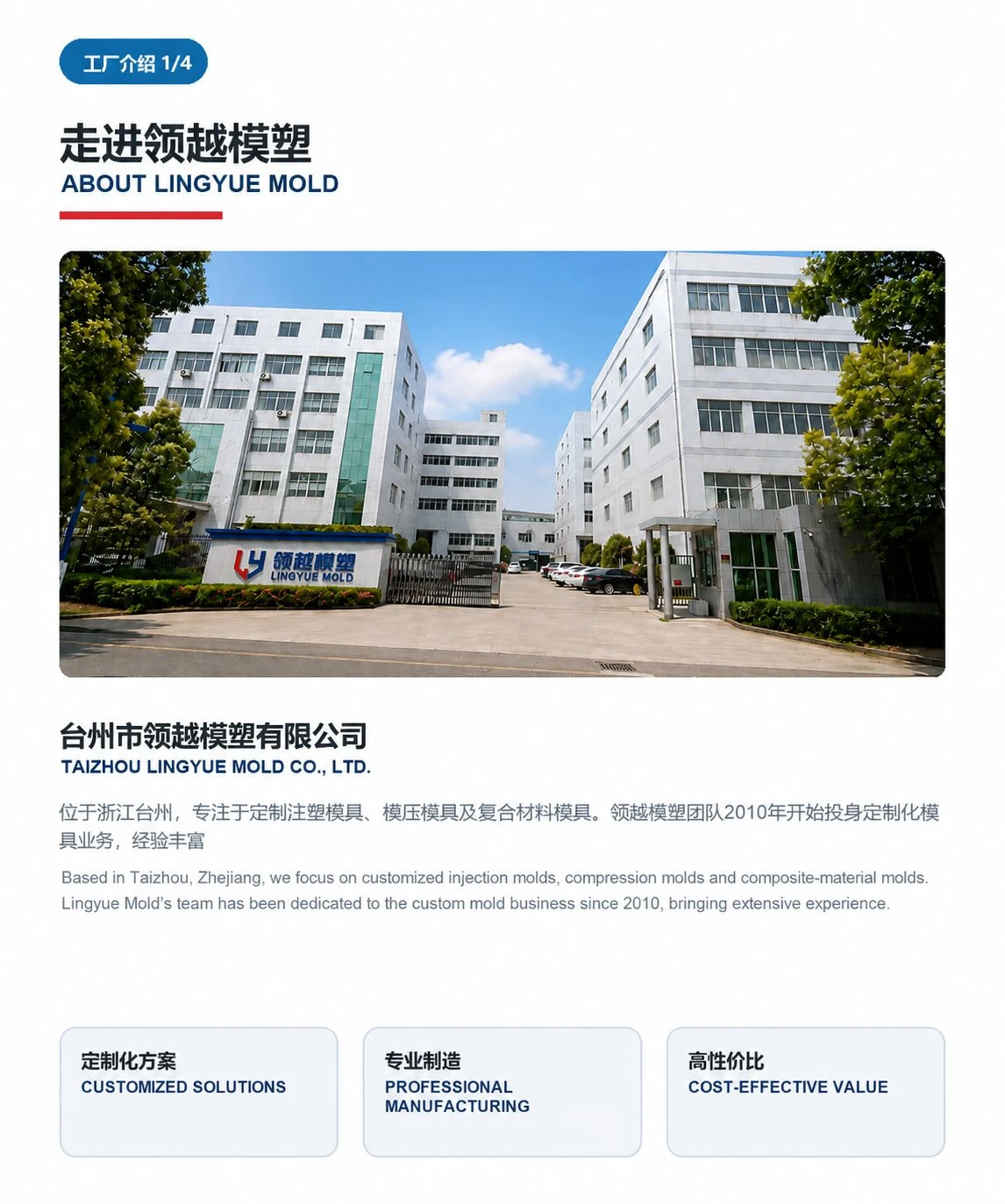
Taizhou Lingyue Mold and Plastic Co., Ltd. is one of the most reliable manufacturers and suppliers of ballistic helmet mold in China. With abundant experience, we are committed to providing high quality customized products with low price. We are warmly welcome you to buy advanced ballistic helmet mold made in China here from our factory. If you have any enquiry about quotation, please feel free to email us.
Product Details
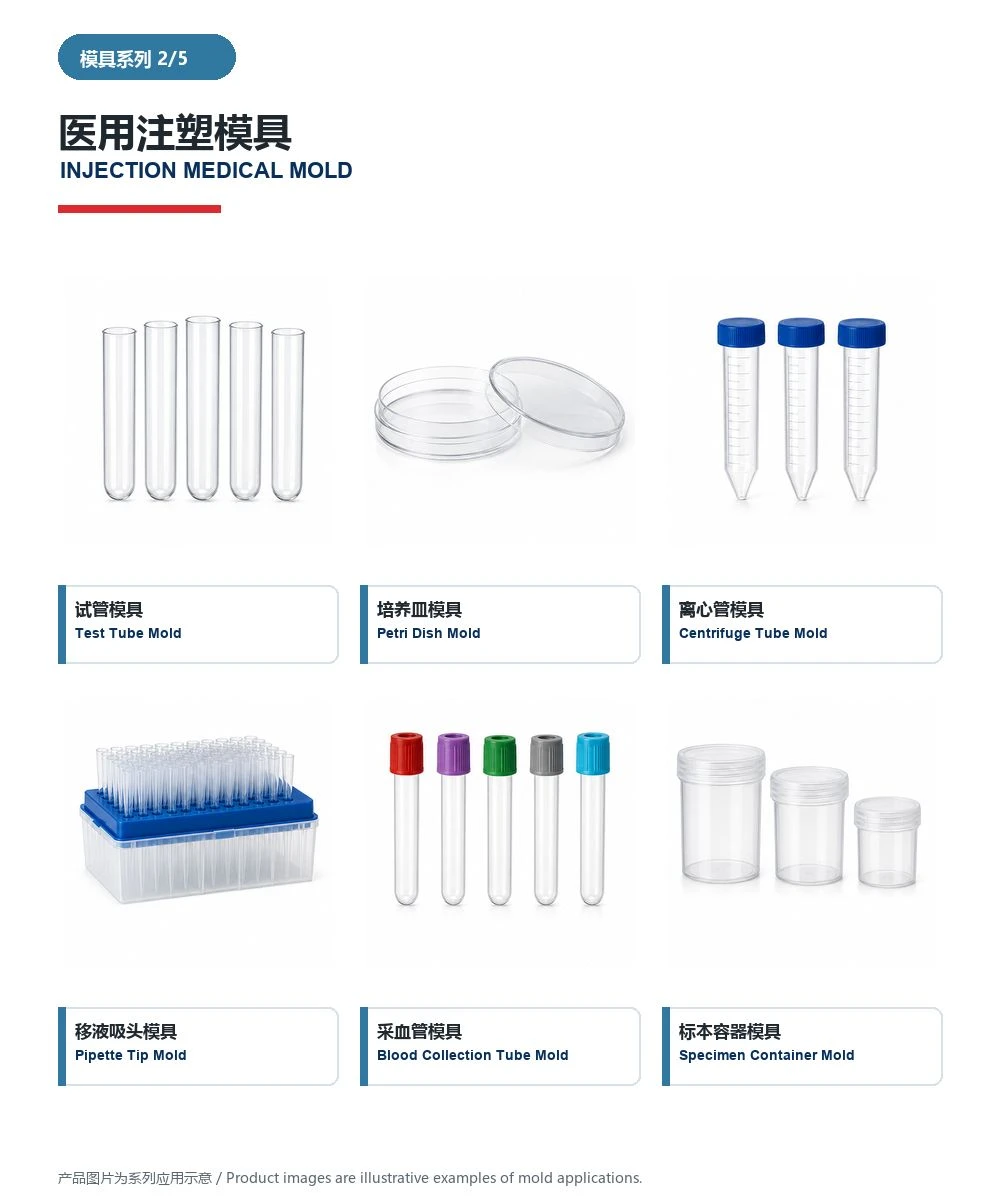
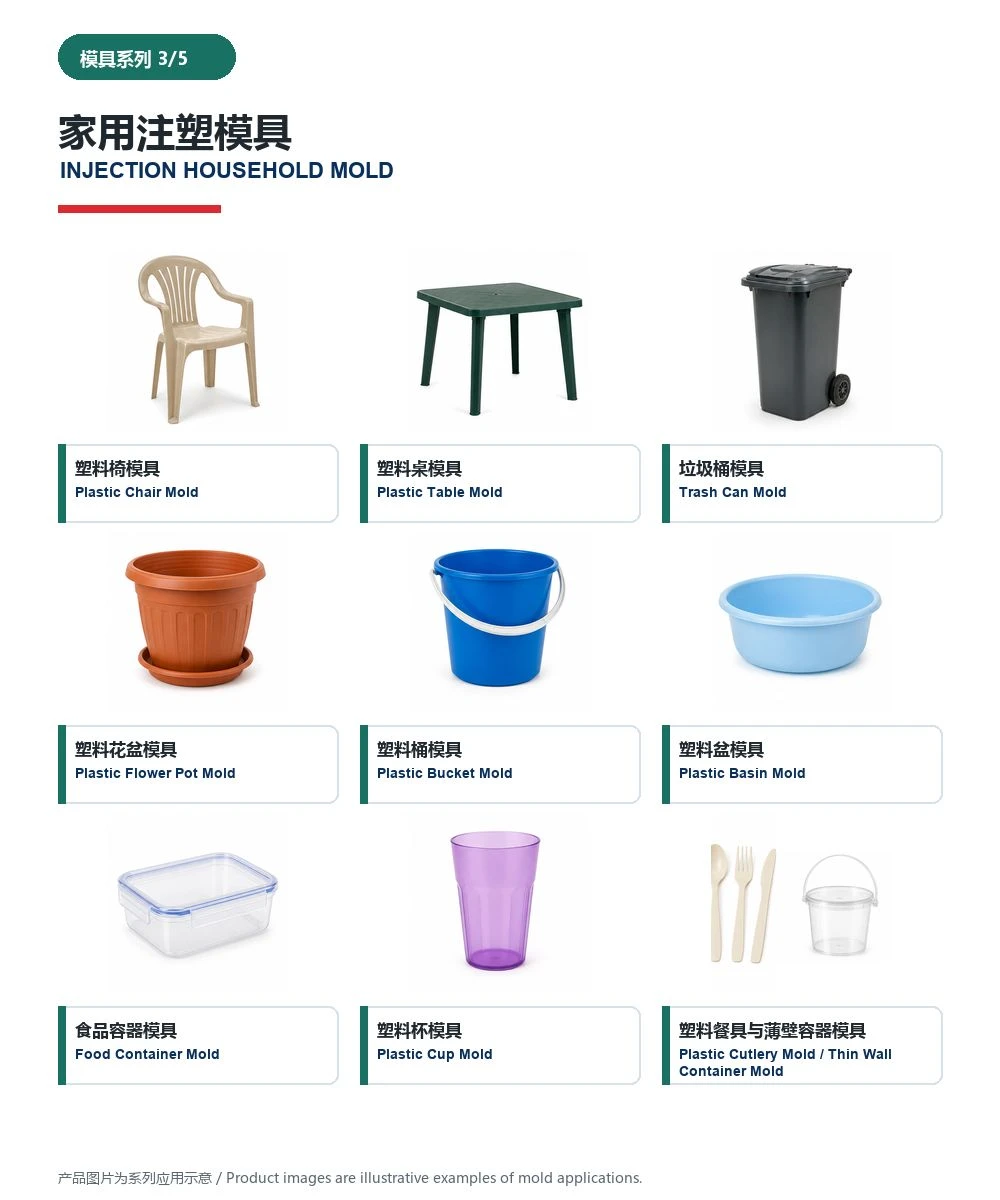
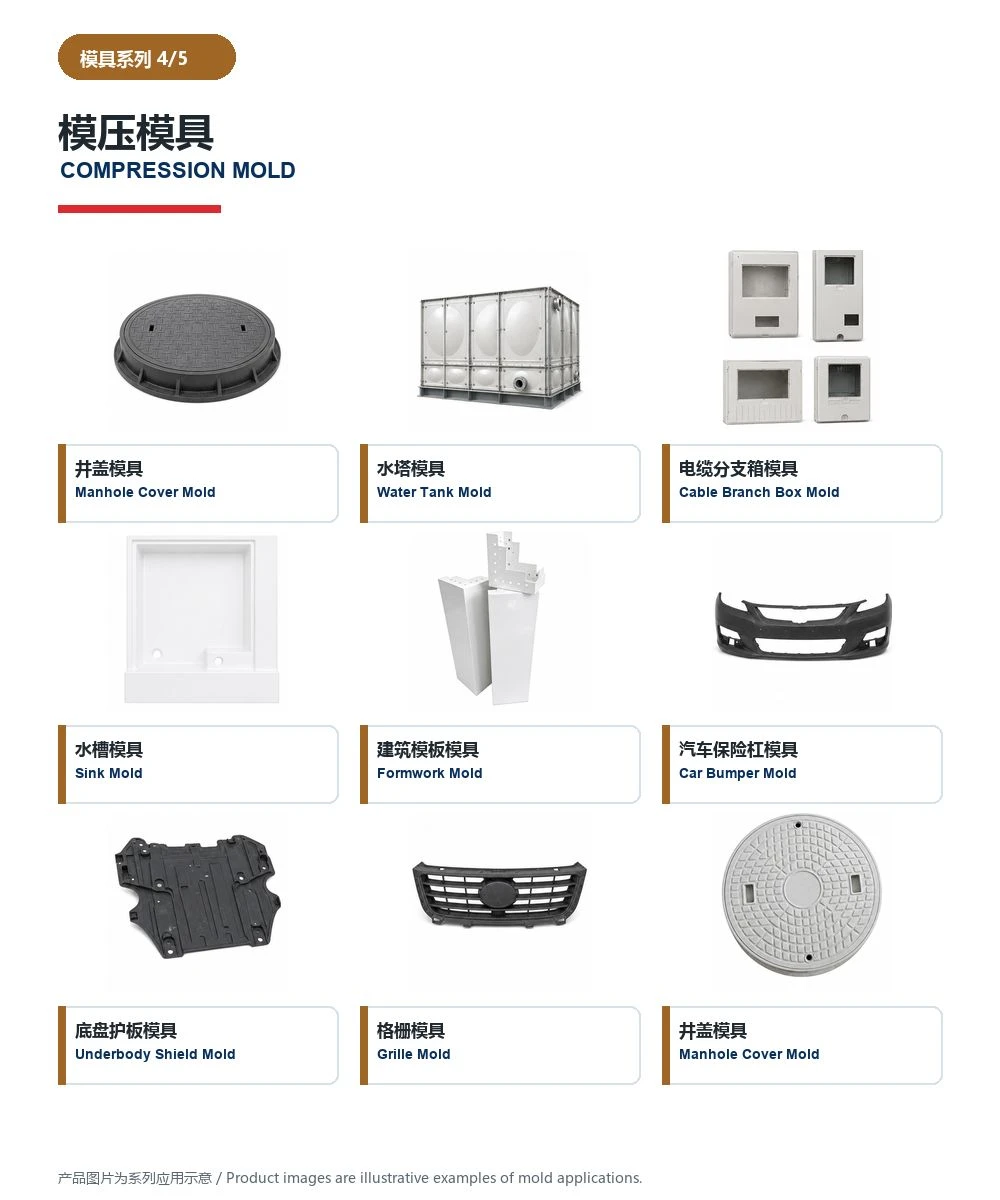
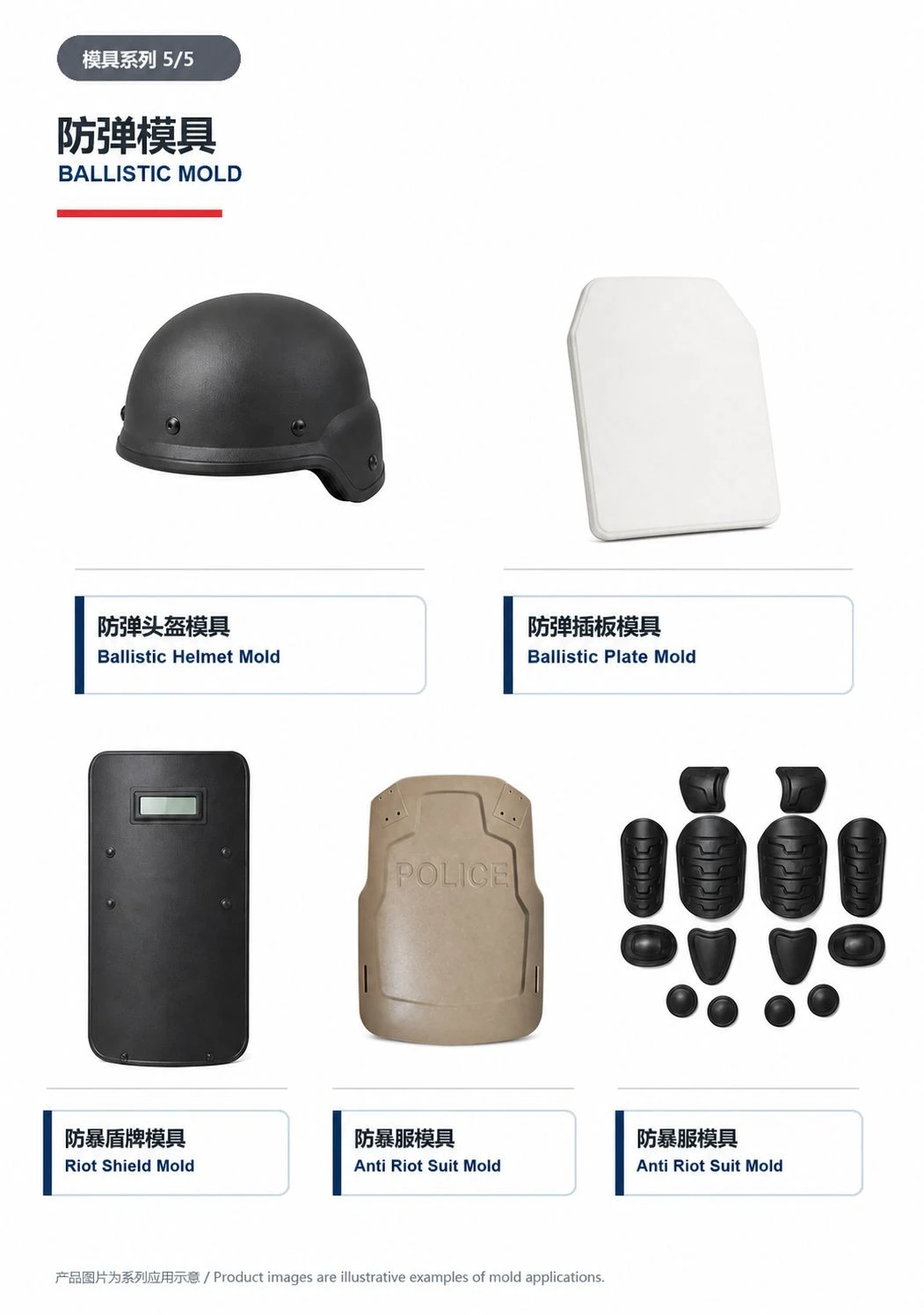
Custom Ballistic Helmet Compression Mold
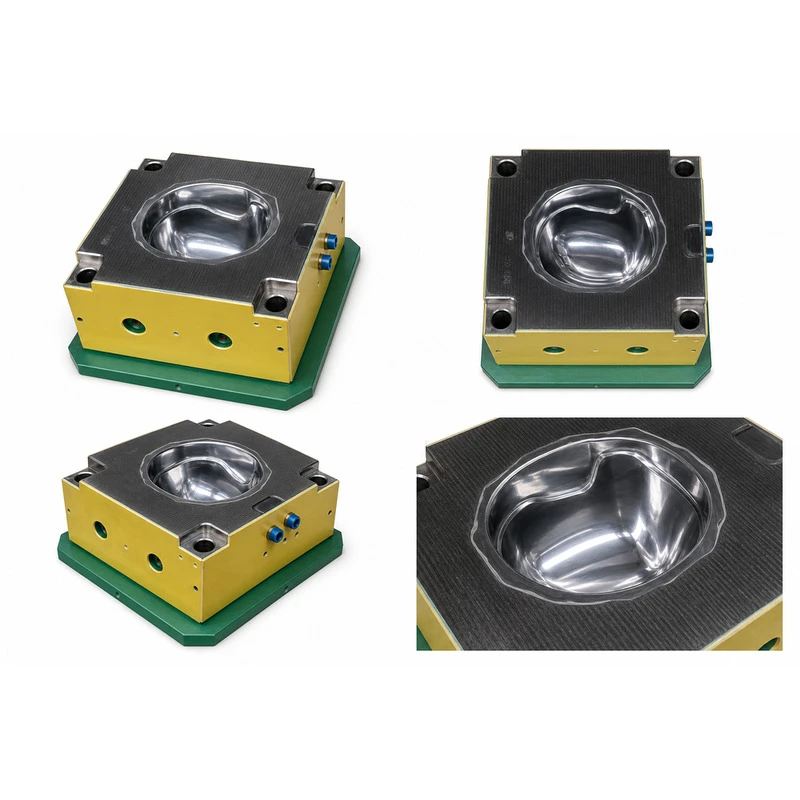
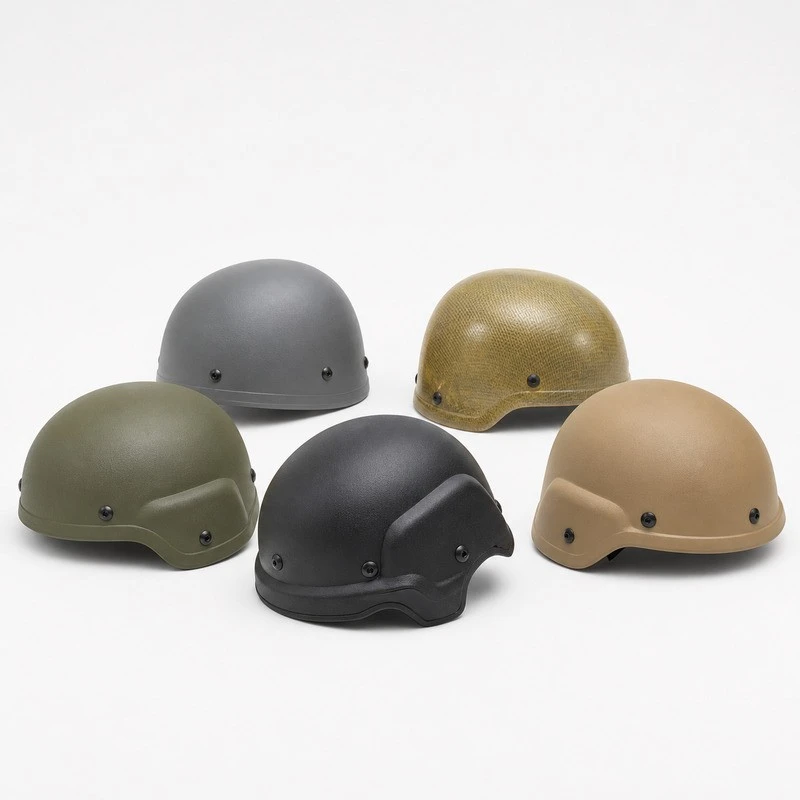
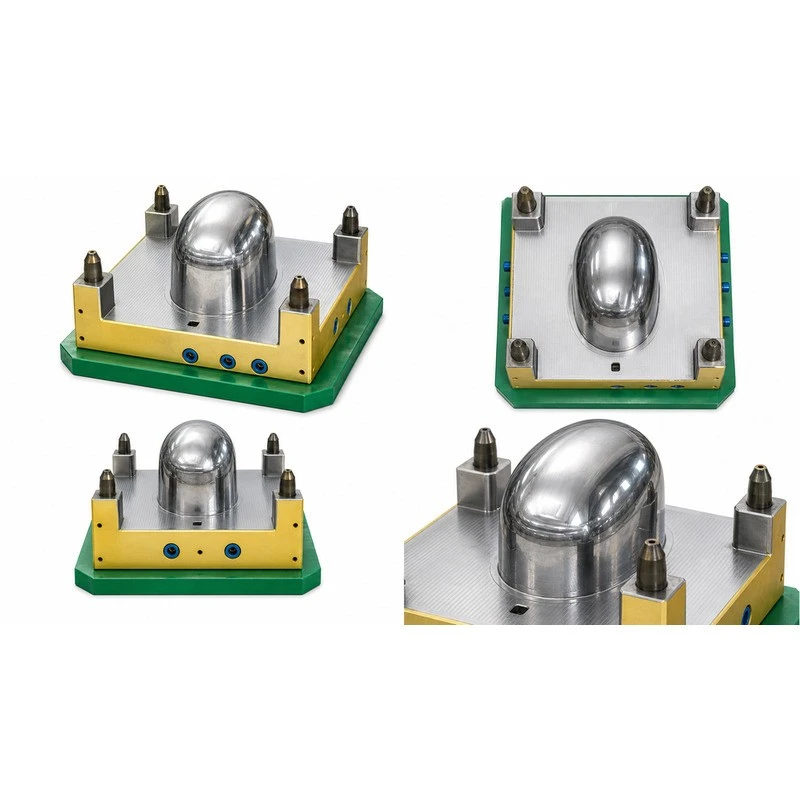
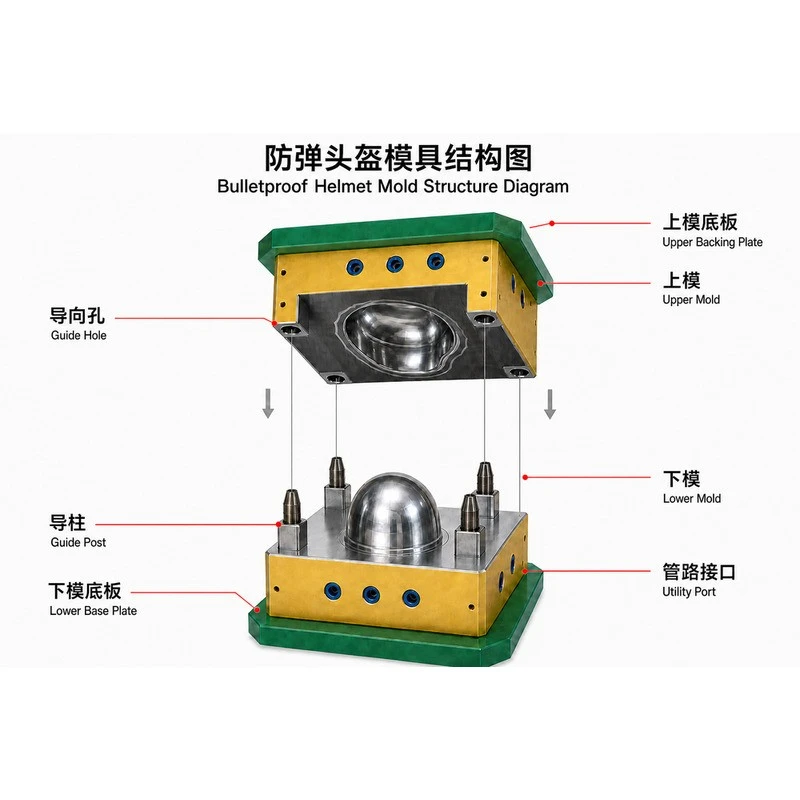
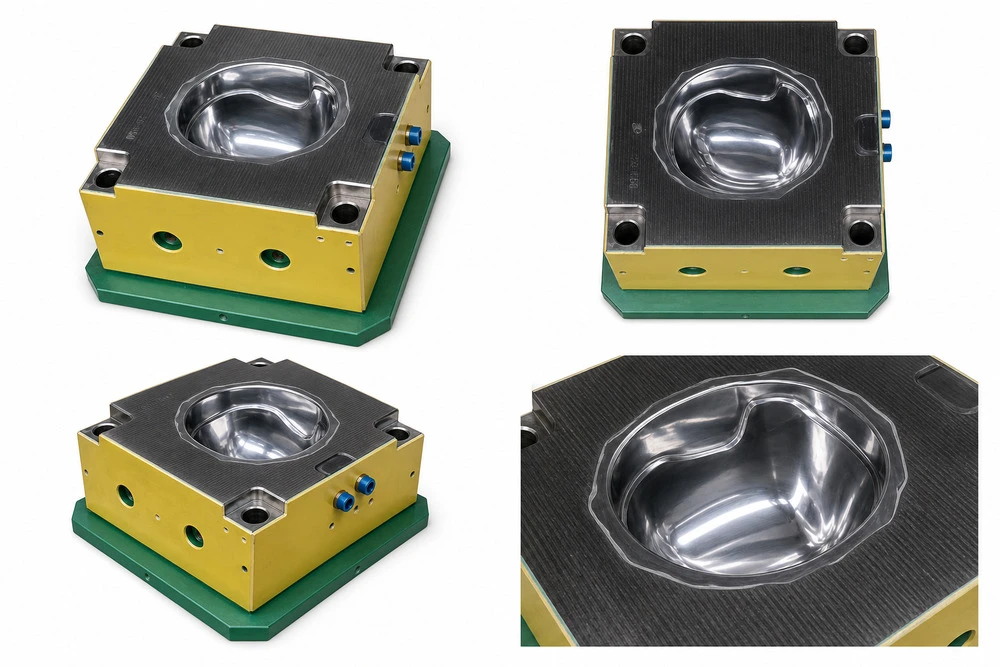
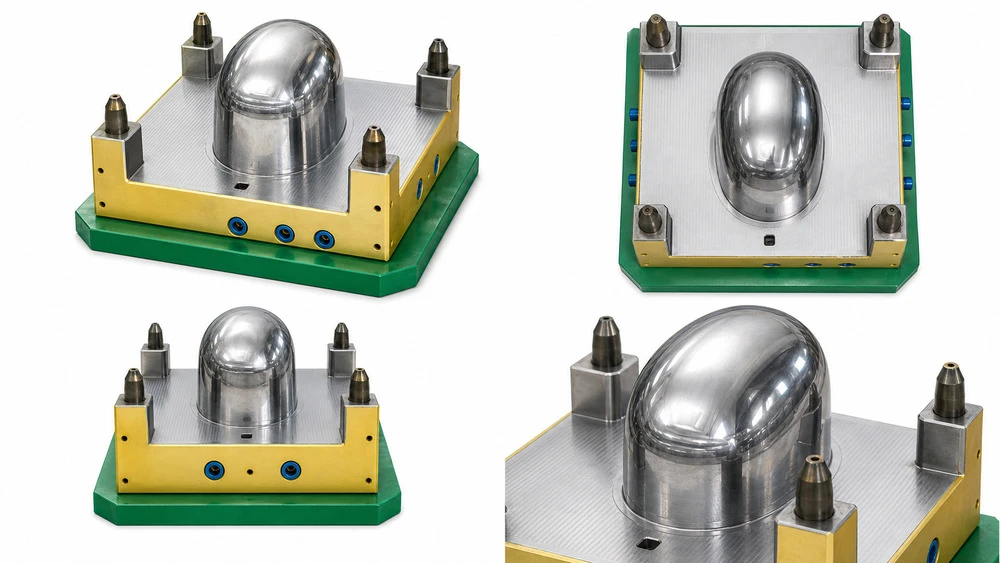
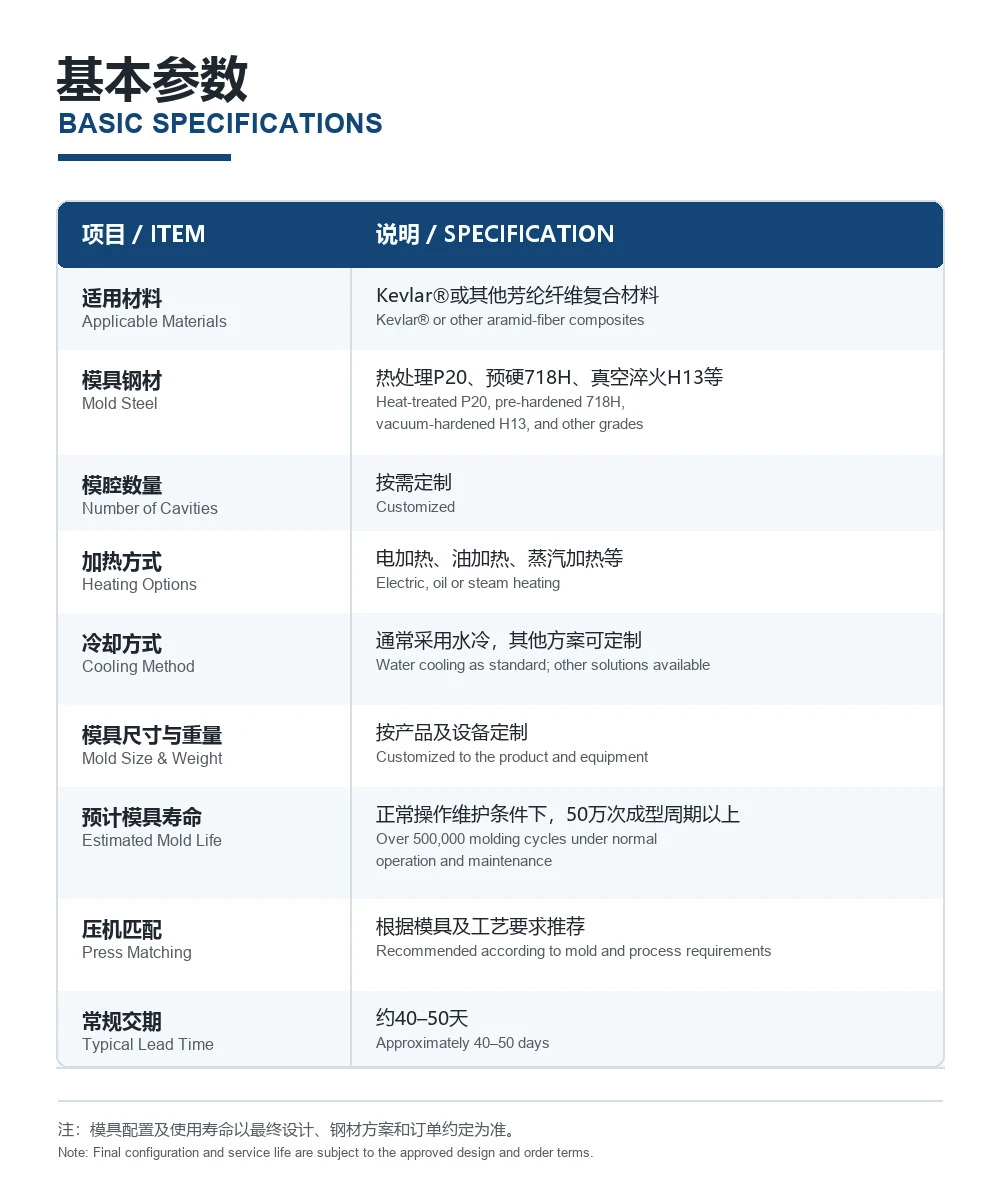
This custom Ballistic Helmet Mold features a precision-matched upper and lower tool structure for the hot compression molding of helmet shells made from Kevlar® or other aramid-fiber composites. It may also be described as a Bulletproof Helmet Mold, Aramid Helmet Compression Mold, Kevlar® Helmet Mold, or Composite Helmet Molding Tool. Custom development is available from customer-supplied 2D drawings, 3D models, or physical samples.
The cavity quantity, helmet-shell geometry, product dimensions, overall mold size, and mold weight can be customized for different tactical, military protective, and composite helmet-shell applications. The mold design takes into account the laminate structure, required shell thickness, material shrinkage, demolding conditions, press platen dimensions, and target production cycle.
Common mold-steel options include heat-treated P20, pre-hardened 718H, vacuum-hardened H13, and other suitable tool-steel grades. The steel and heat-treatment solution can be selected according to production volume, molding temperature, working pressure, surface-quality requirements, expected mold life, and project budget. Each steel grade offers a different balance of hardness, wear resistance, toughness, machinability, and long-term dimensional stability.
Electric heating, oil heating, steam heating, and other temperature-control systems are available. Separate temperature-control zones can be designed for the helmet crown, sidewalls, and edge areas. Water cooling is commonly used, while alternative heating and cooling solutions can be customized according to the aramid prepreg, resin system, curing profile, and available production equipment. Proper temperature control helps improve heat uniformity, molding stability, and production efficiency.
Under normal operating and maintenance conditions, the Bulletproof Helmet Mold/Mould is expected to achieve more than 500,000 molding cycles. Actual service life depends on the mold steel, heat-treatment quality, composite material, molding temperature and pressure, operating practices, and maintenance. Higher-grade steel with appropriate heat treatment generally provides better wear resistance and a longer working life.
Suitable press tonnage, platen size, stroke, and daylight can be recommended according to the mold dimensions, mold weight, projected molding area, required molding pressure, and production process. The typical lead time for a standard custom helmet compression mold is approximately 40–50 days, subject to design approval, mold complexity, trial requirements, and the formal order.
The mold controls helmet-shell geometry, dimensions, thickness distribution, molding temperature, and pressure. Final ballistic performance also depends on the composite material, lay-up structure, molding parameters, finishing process, and quality control. Finished helmets should be tested according to the applicable performance standard.
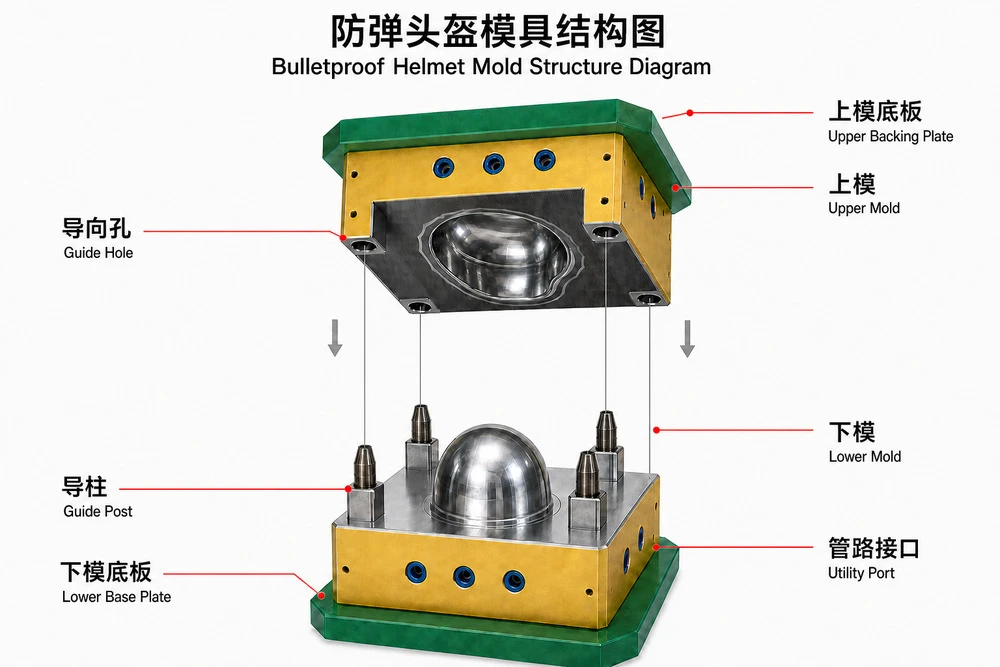
Mold Steel and Specifications
H13 and S136 are optional steel examples. Final steel and heat treatment are project-specific and are not standard simultaneous materials for every carbon fiber mold.
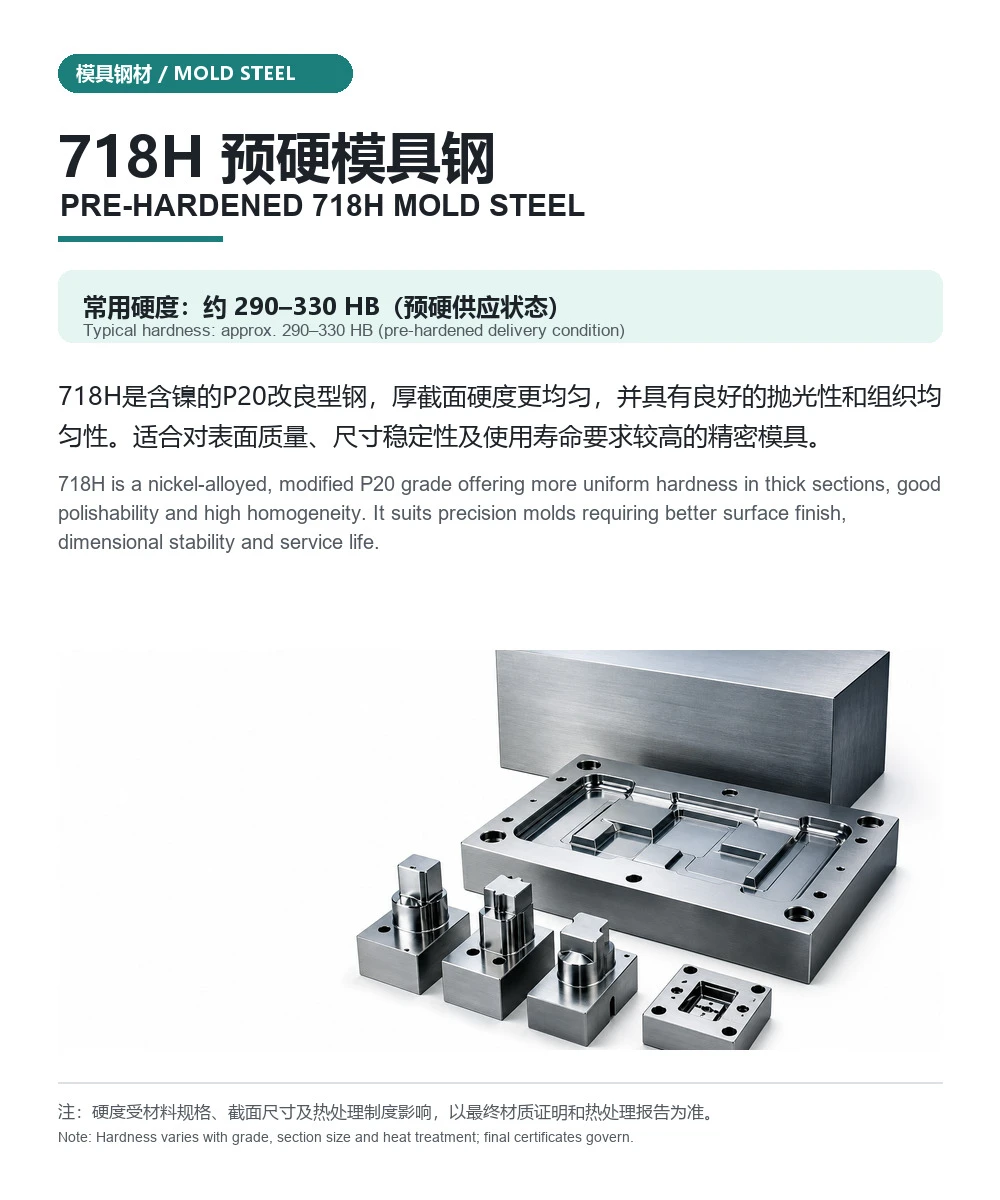
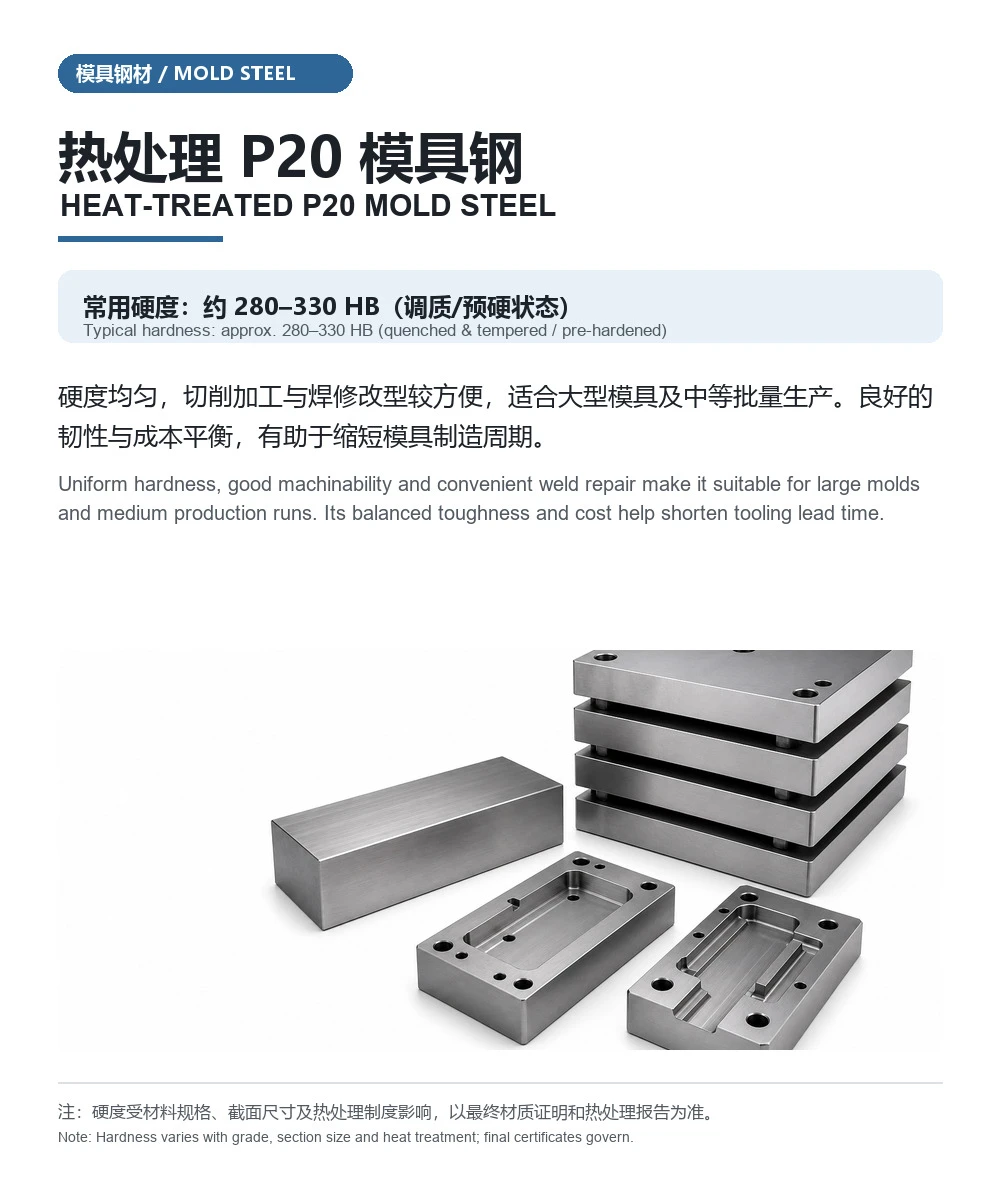
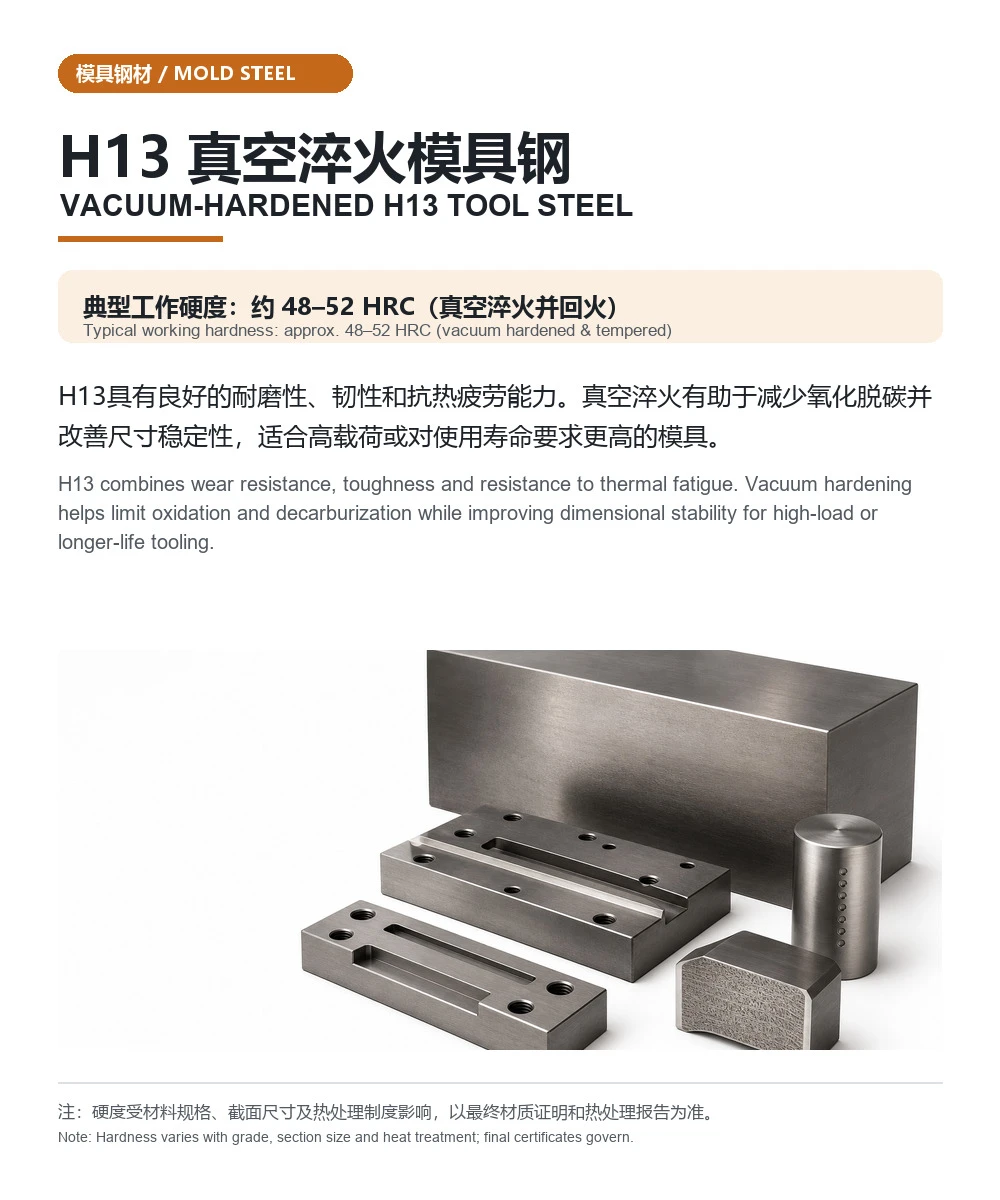
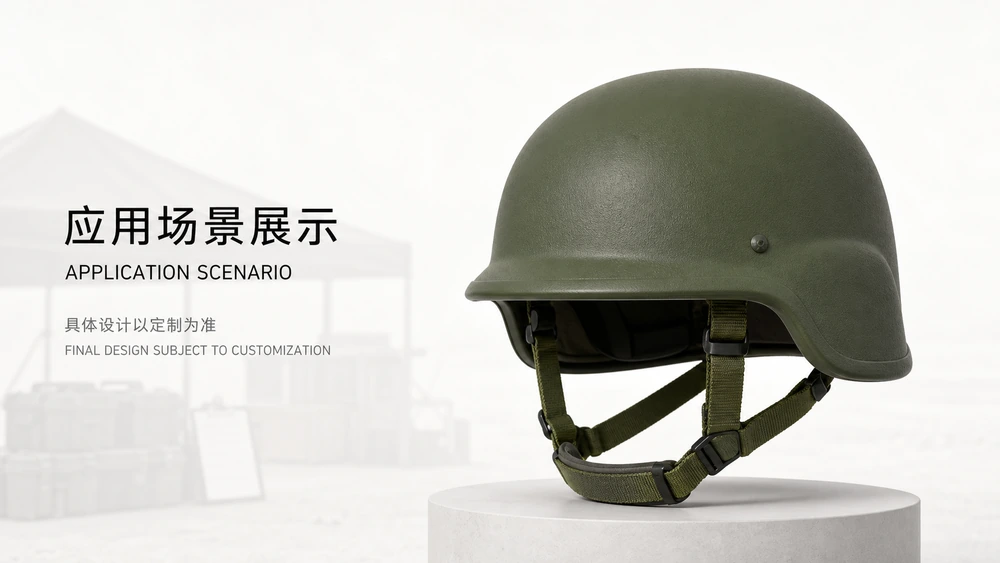
Application Scenarios
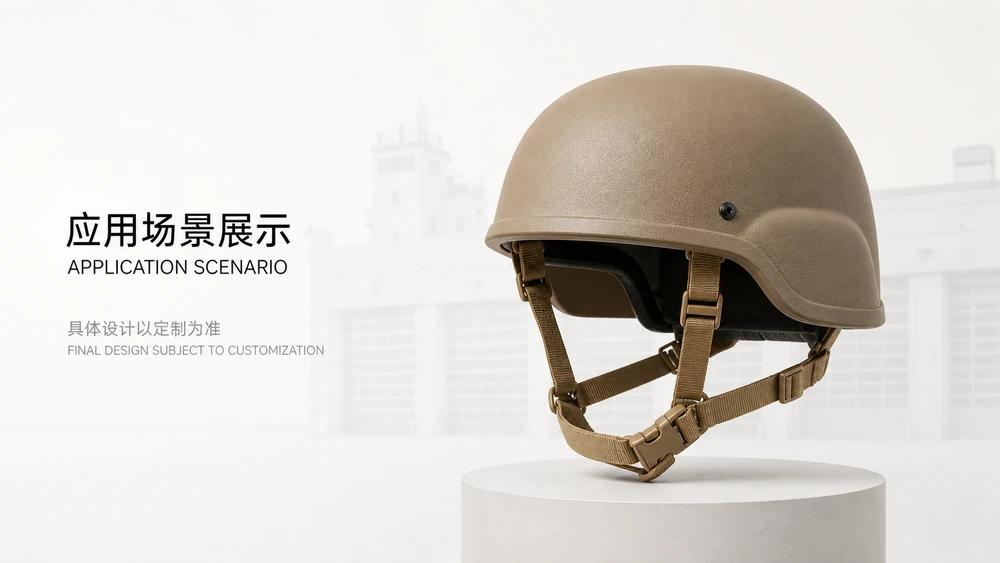
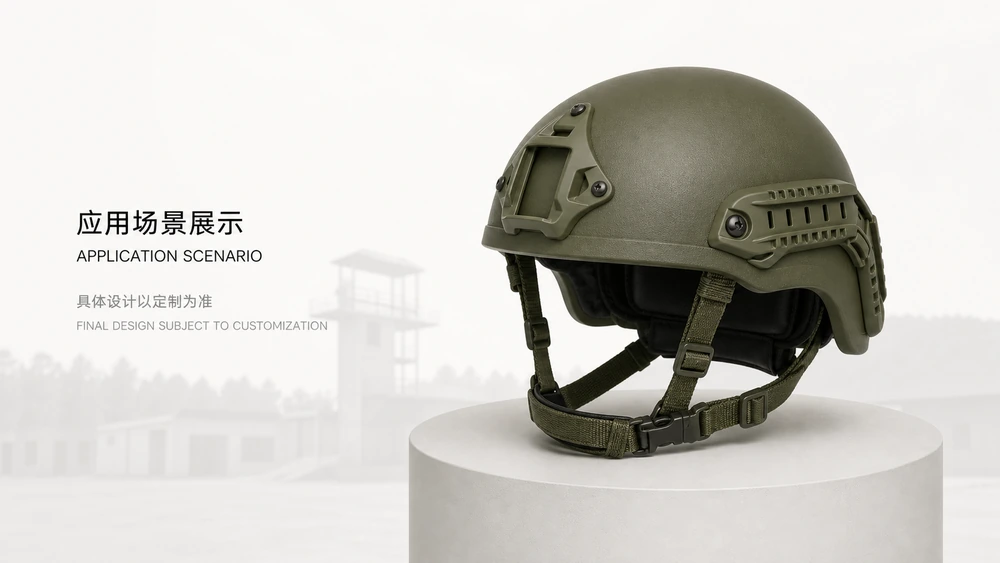
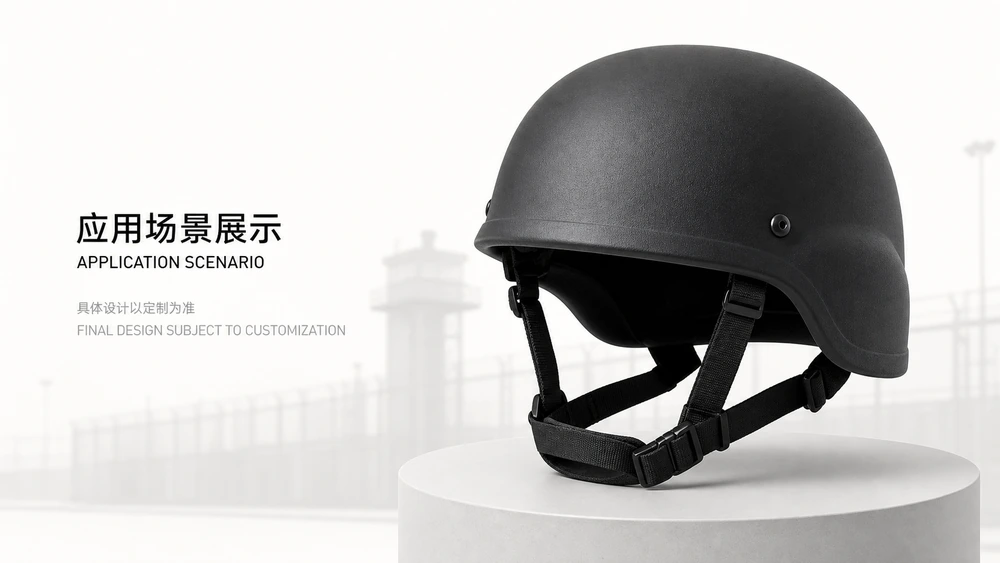
Bulletproof helmet molds are mainly used for hot-press forming of aramid, UHMWPE and other composite helmet shells. They support the production of protective headgear for military and law-enforcement personnel, security equipment, training protection and specialized occupational applications. Stable control of temperature, pressure and forming geometry helps achieve uniform shell thickness, accurate contours and consistent dimensions.
Each mold can be customized according to helmet shape, size, material lay-up and production process. It is suitable for prototype development, small-batch trials and volume production. A well-designed mold structure, guiding system and heating or cooling solution can improve forming stability, shorten production cycles and reduce secondary finishing work.
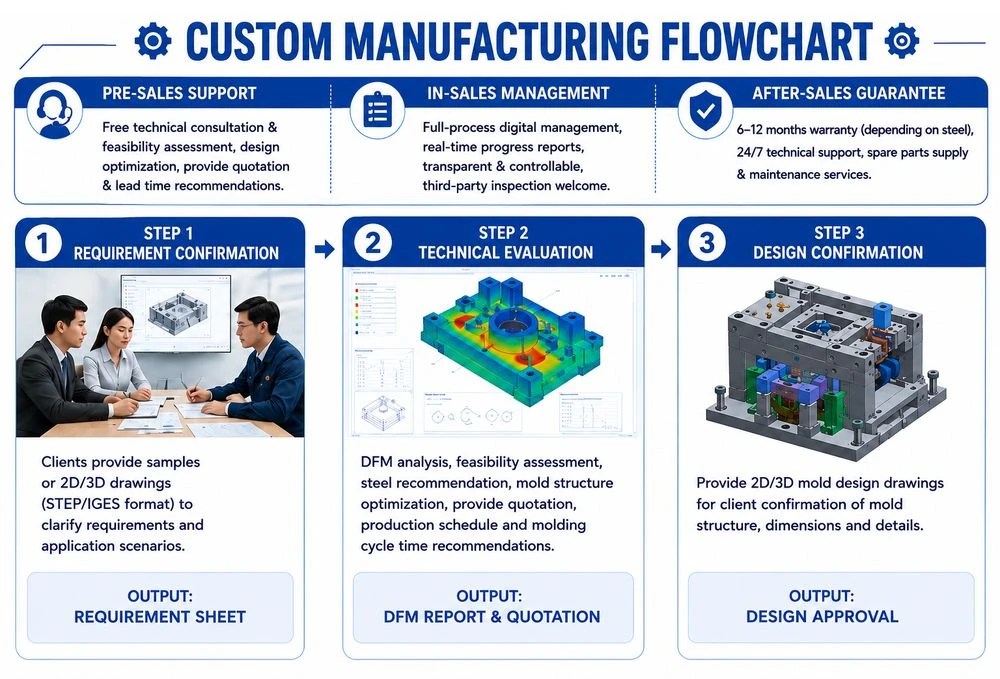
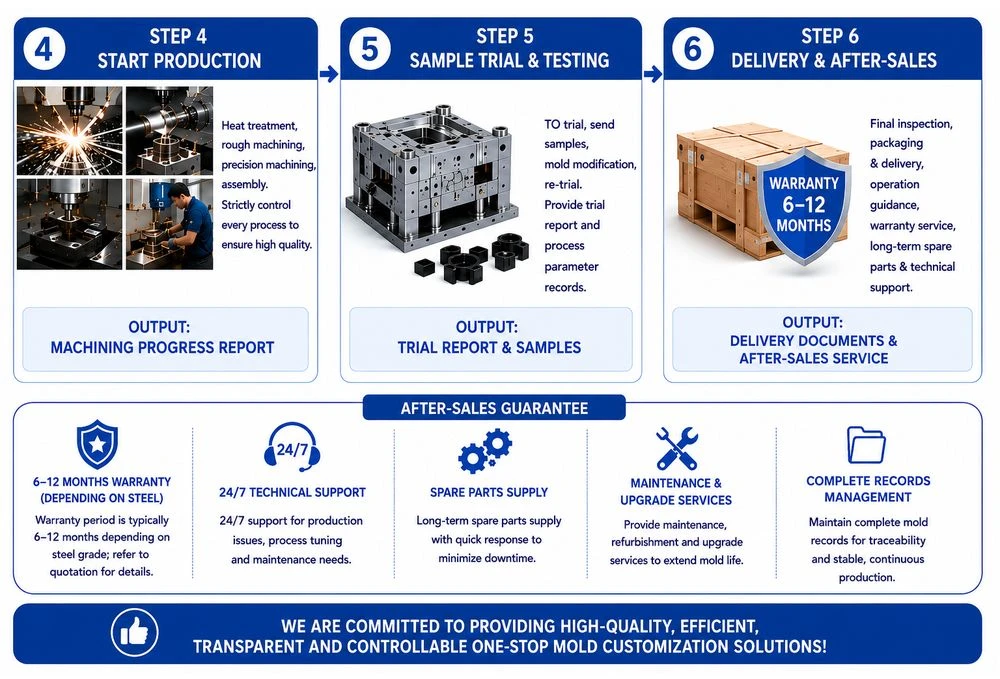
Mold Customization Process
We provide one-stop mold customization services-from requirement analysis and design to manufacturing, trial and delivery-with transparent progress and controlled quality.
Requirement Confirmation
Provide samples, 2D/3D drawings or product information to confirm materials, dimensions, process and application requirements.
Technical Evaluation
We conduct DFM analysis and recommend the mold structure, steel grade, lead time and quotation.
Design Approval
We provide 2D/3D mold drawings for approval before manufacturing begins.
Manufacturing
Steel preparation, heat treatment, machining, assembly and inspection are completed with progress updates.
Mold Trial
The mold is tested and optimized according to sample quality and trial results.
Delivery & After-Sales
Final inspection, packing and delivery are followed by operating guidance, technical support and spare-parts service.
Warranty is typically 6–12 months, subject to steel grade, operating conditions and order terms.
Factory Introduction
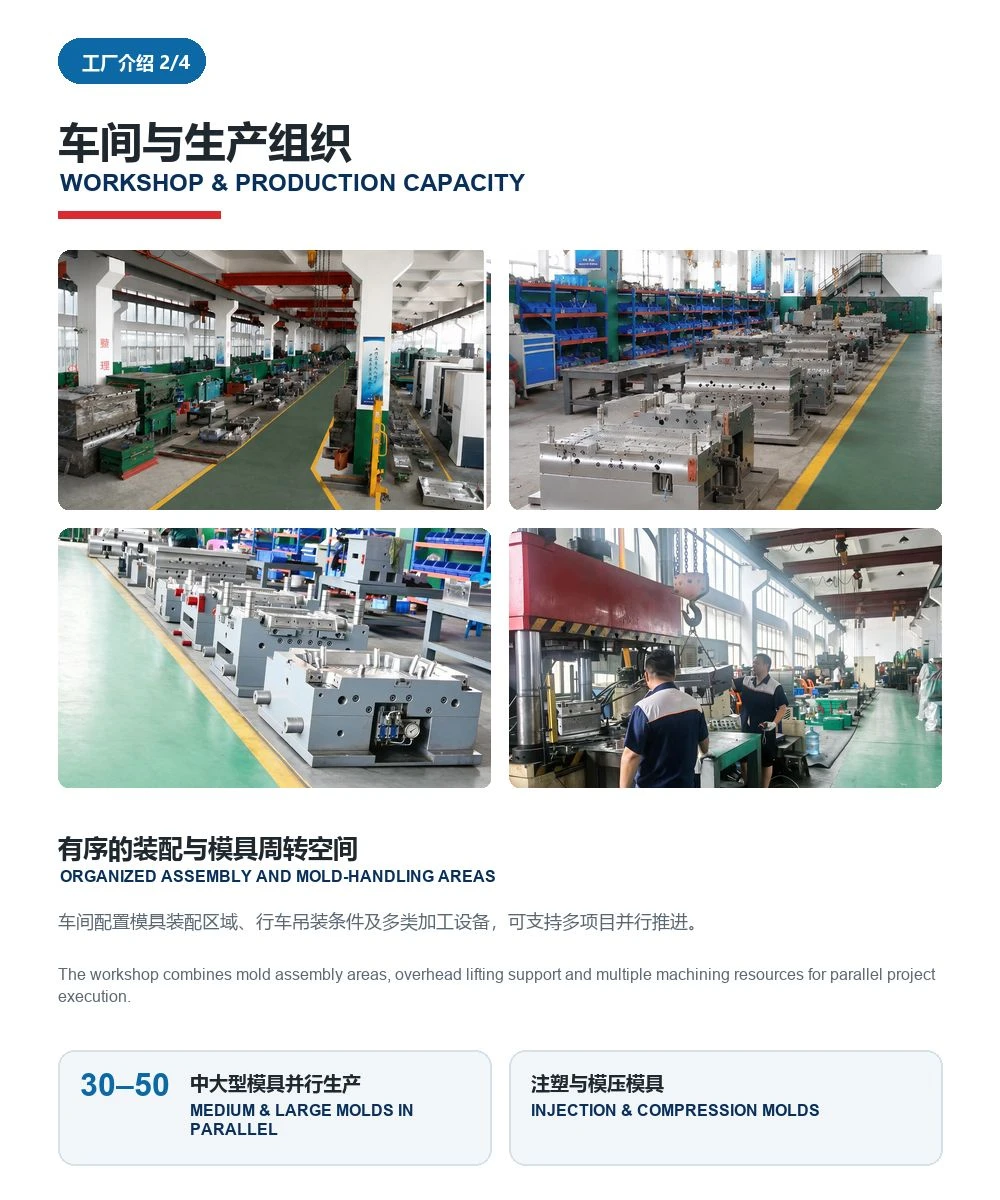
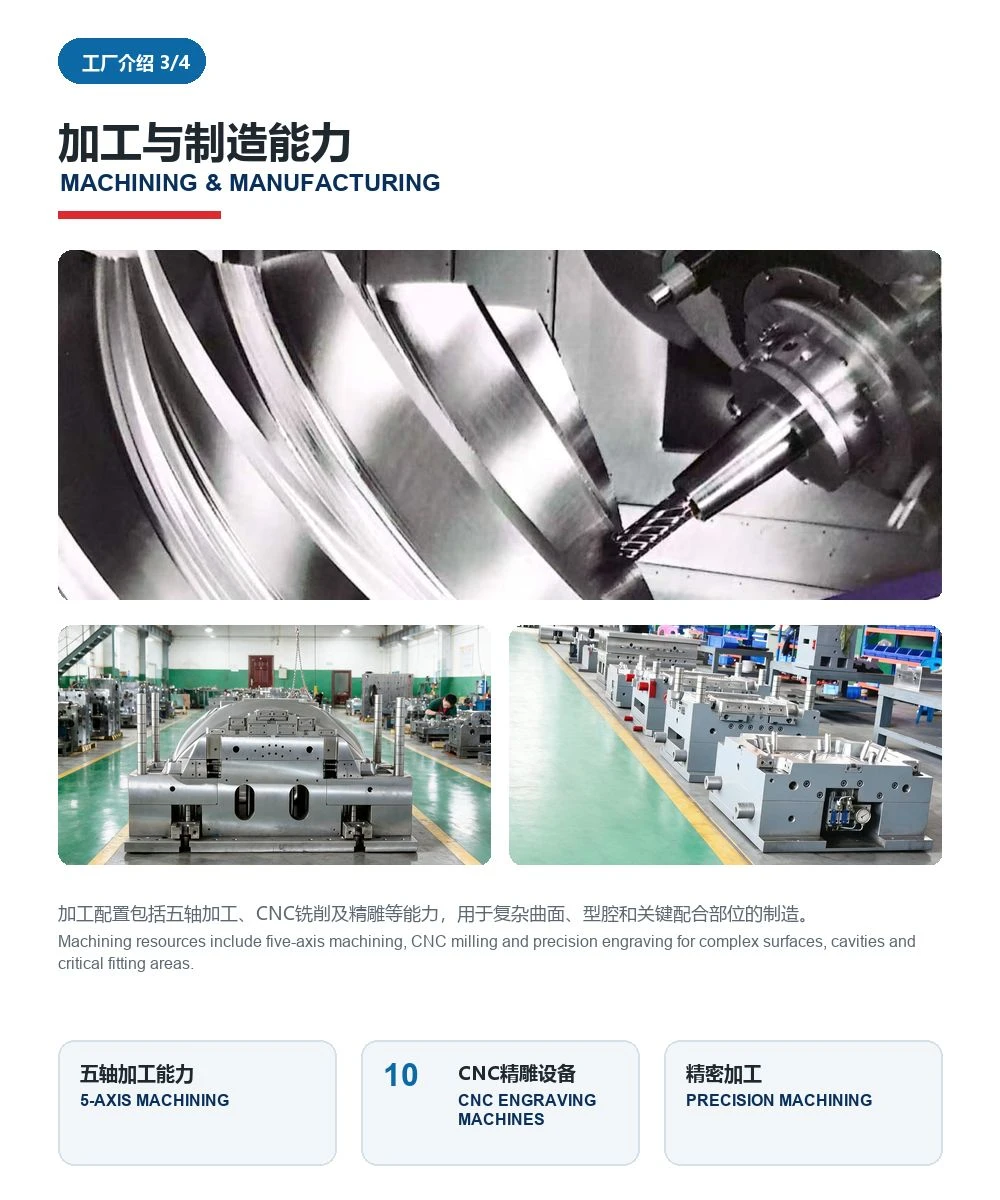
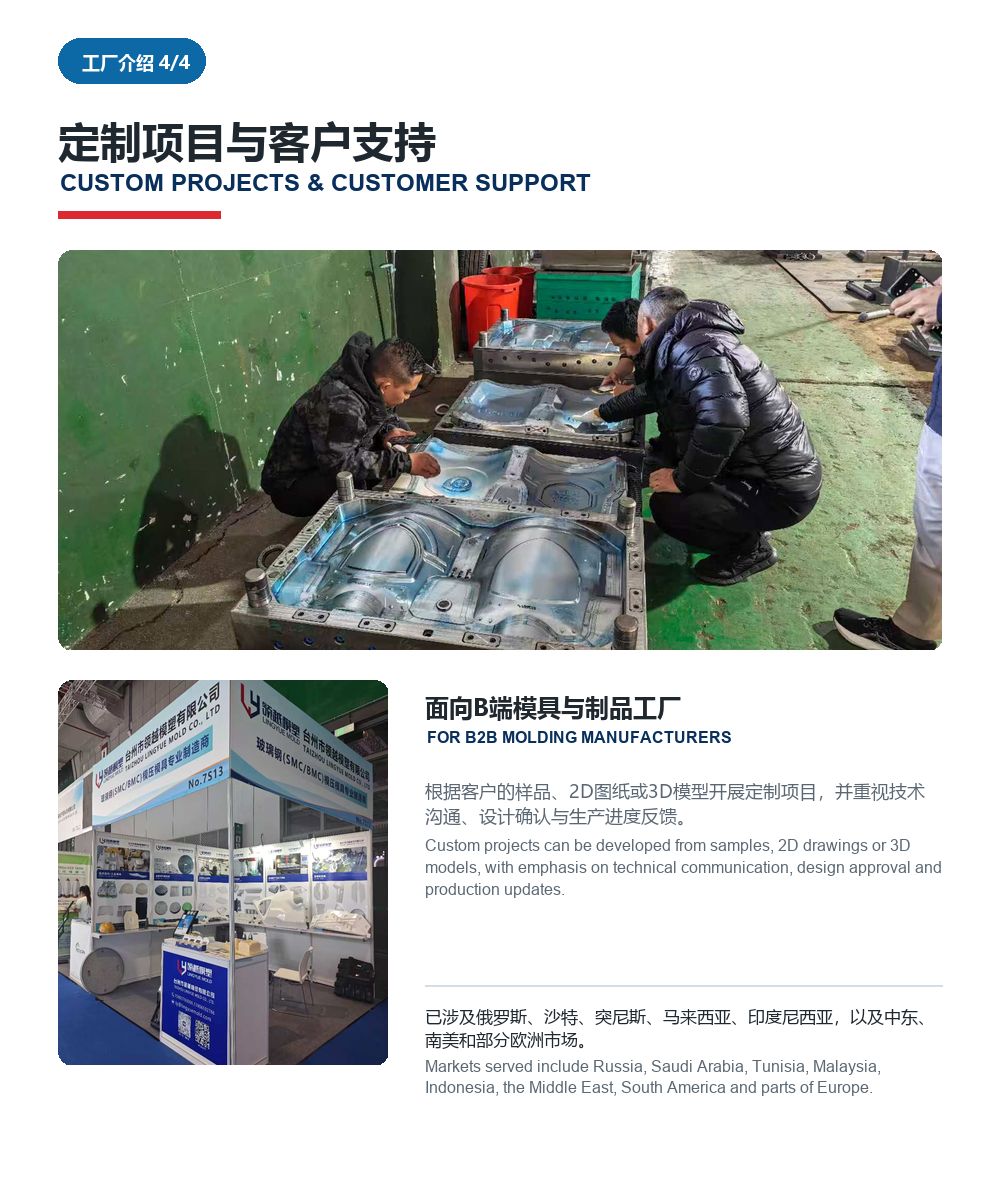
Ballistic Helmet Mold FAQ
Q: How much does a ballistic helmet mold cost?
A: There is no fixed price for a ballistic helmet mold. The cost depends on the helmet geometry, mold size, mold steel, number of cavities, heating and cooling systems, machining precision, and trial requirements. A project-specific quotation can be prepared after reviewing the product drawings, material system, and press specifications.
Q: What materials are compatible with the helmet mold?
A: The mold can be designed for Kevlar® or other aramid-fiber composites. For UHMWPE or other prepreg systems, the material datasheet and molding temperature, pressure, and time profile should be provided for technical evaluation.
Q: What heating methods are available?
A: Electric, oil, steam, and other heating solutions are available. The selection depends on the material curing profile, heating rate, temperature uniformity, control accuracy, and available factory utilities.
Q: How is the required press tonnage determined?
A: Press tonnage cannot be determined by mold size alone. It must be calculated according to the projected molding area, required molding pressure, mold dimensions, platen size, stroke, and daylight. Suitable press parameters can be recommended after technical evaluation.
Q: How many cavities can a ballistic helmet mold have?
A: The number of cavities can be customized according to production capacity and equipment conditions. A single-cavity mold is generally easier to adjust and more flexible, while a multi-cavity mold can increase output but requires greater press capacity and more precise temperature and pressure control.
Q: What is the expected service life of the mold?
A: Under normal operation and maintenance, the mold is expected to achieve more than 500,000 molding cycles at least. Actual service life also depends on mold steel, heat treatment, molding temperature and pressure, material characteristics, operation, and maintenance frequency.
Q: What is the typical lead time for a ballistic helmet mold?
A: For a standard project, the typical lead time is approximately 40–50 days after technical and design confirmation. Complex structures, multi-cavity molds, or special temperature-control systems may require additional time.
Q: Can the mold be tested before shipment?
A: Trial molding can be arranged according to the agreed project scope. The trial evaluates mold operation, temperature control, pressure transfer, demolding, product geometry, and dimensions. Trial samples, records, and reference process parameters can also be provided as agreed.
Q: Can the mold be customized for different helmet sizes and shell designs?
A: Yes. Helmet geometry, size, edge profile, and mounting-hole positions can be customized according to approved 3D drawings, dimensional specifications, or physical samples. Separate molds or a multi-size production solution can be evaluated for different helmet sizes.
Q: What technical support is provided after delivery?
A: Depending on the project scope, support may include installation and operating guidance, reference molding parameters, trial-production assistance, maintenance recommendations, and spare-parts service. Warranty coverage, service period, and on-site support are subject to the final quotation and contract.
Hot Tags: ballistic helmet mold, China ballistic helmet mold manufacturers, suppliers, factory


