


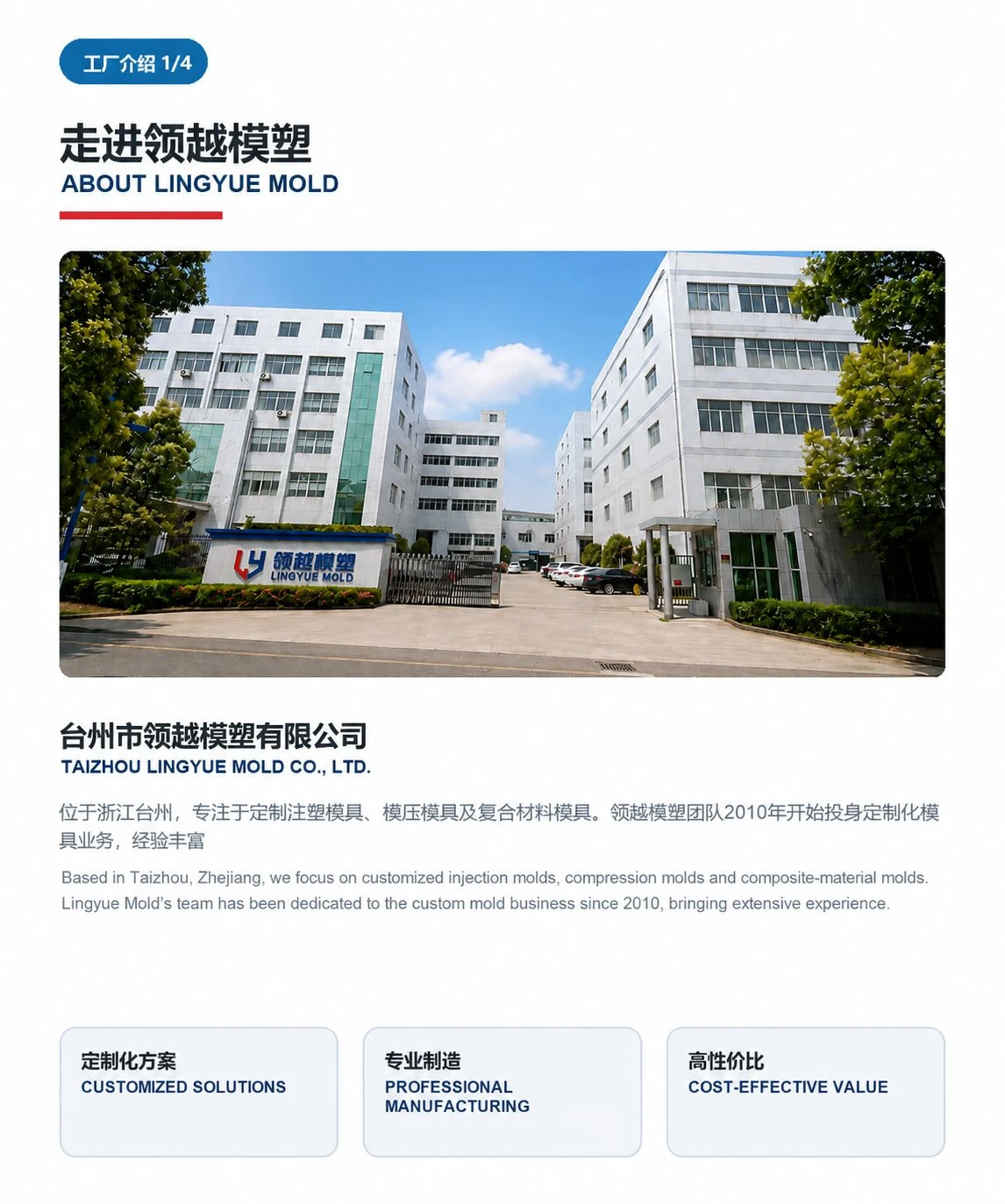
Taizhou Lingyue Mold and Plastic Co., Ltd. is one of the most reliable manufacturers and suppliers of ballistic plate mold in China. With abundant experience, we are committed to providing high quality customized products with low price. We are warmly welcome you to buy advanced ballistic plate mold made in China here from our factory. If you have any enquiry about quotation, please feel free to email us.
Product Details
Custom Ballistic Plate Compression Mold
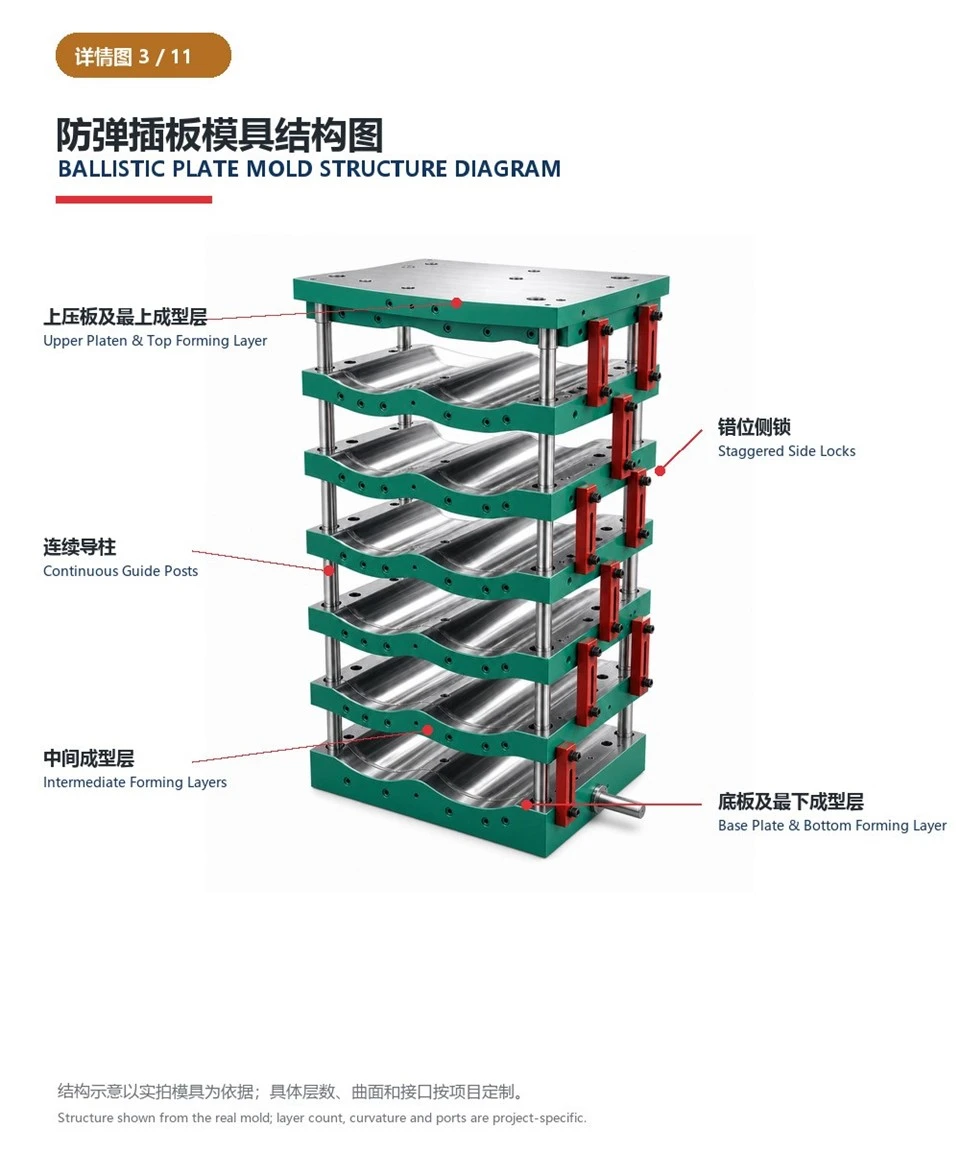
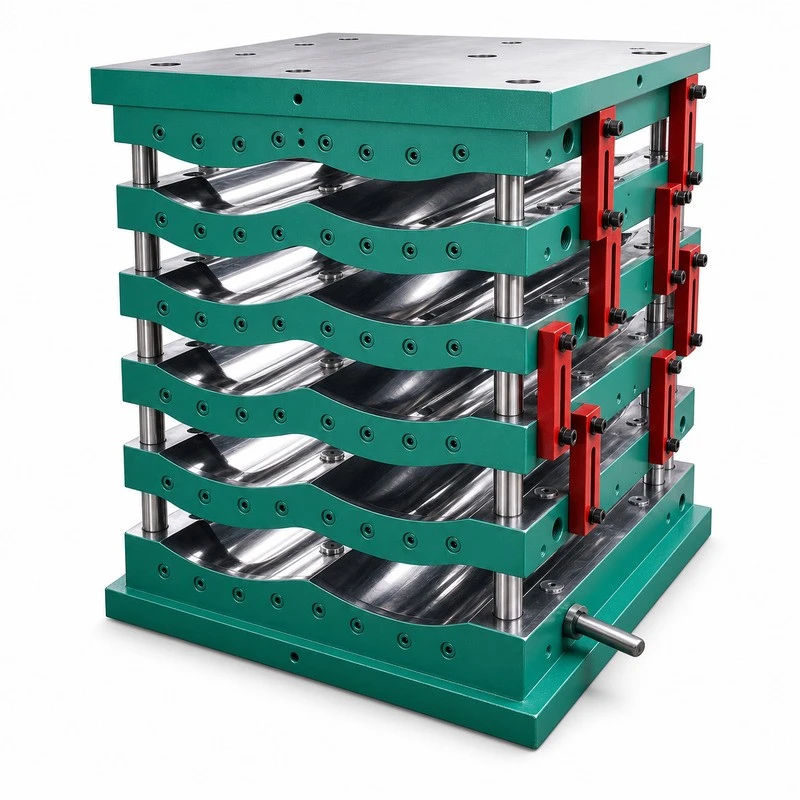
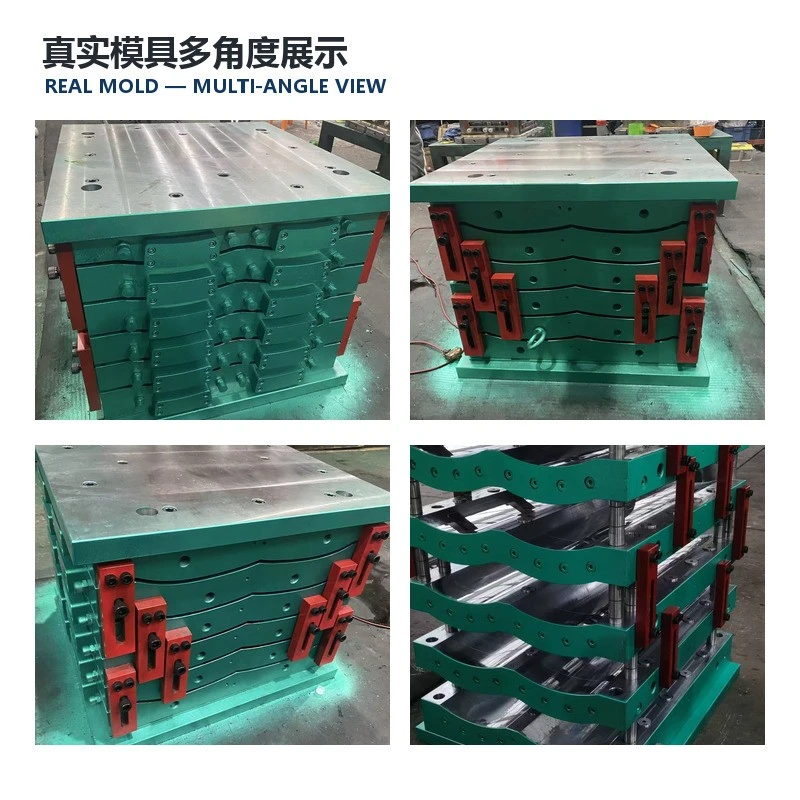
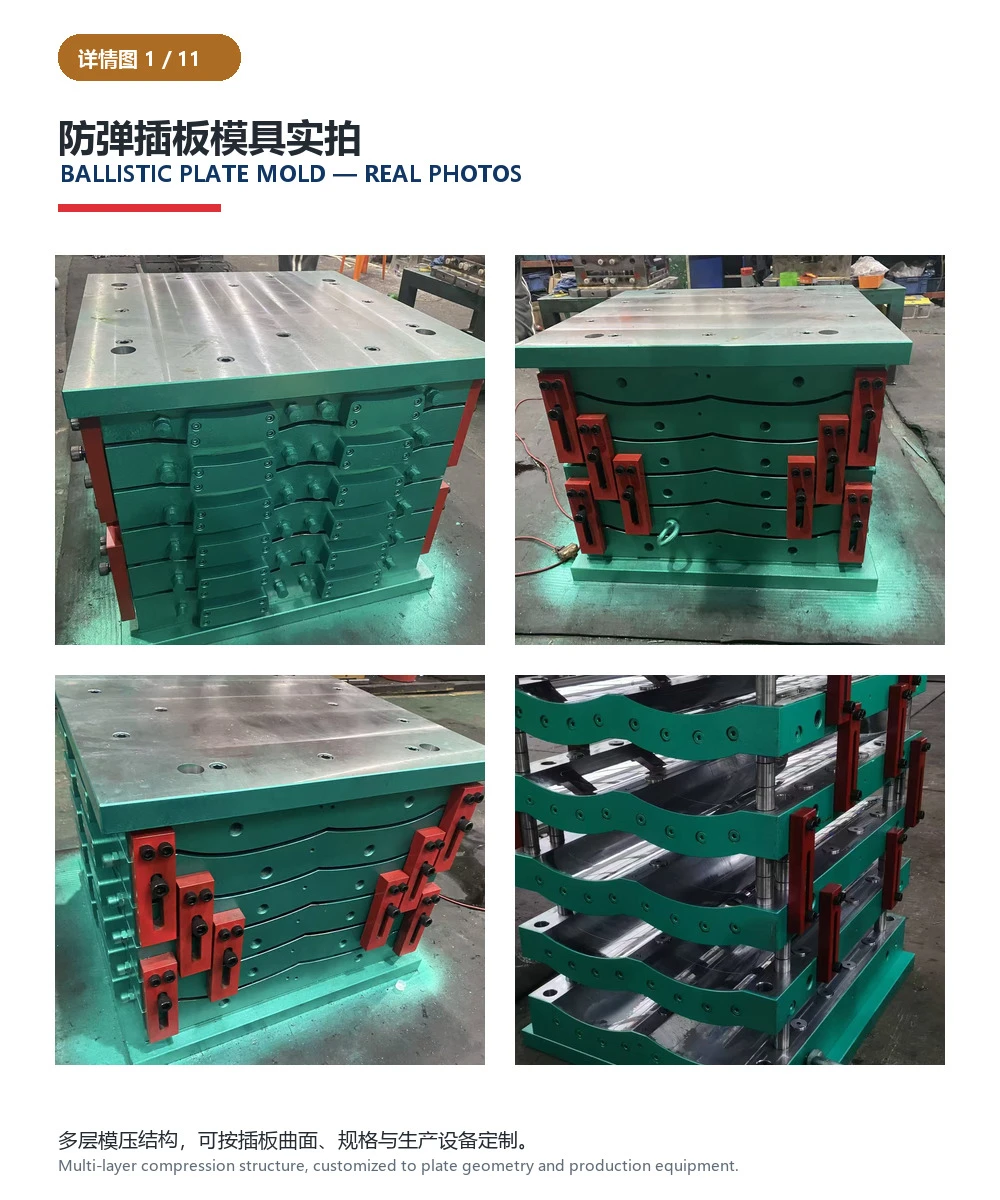
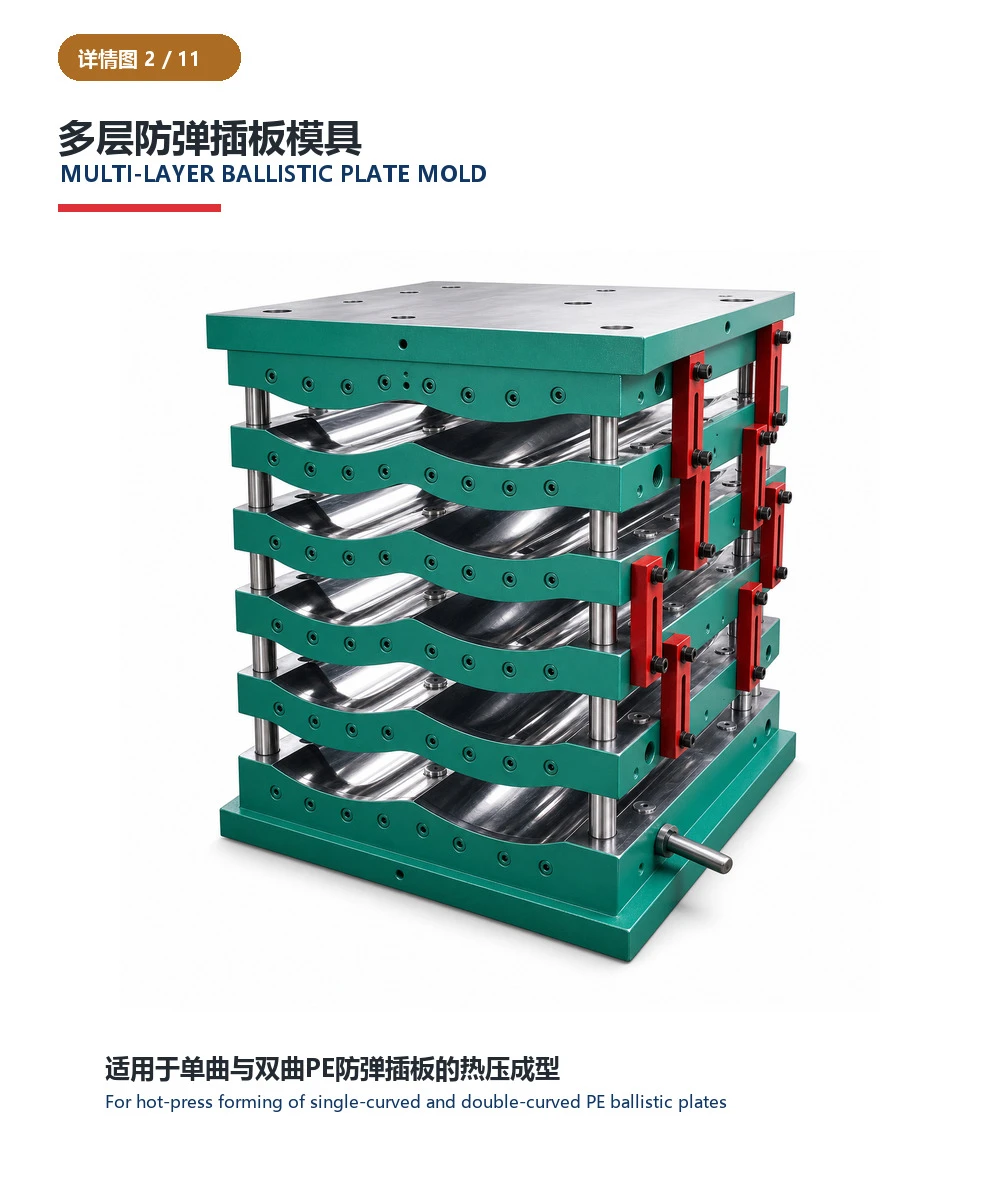
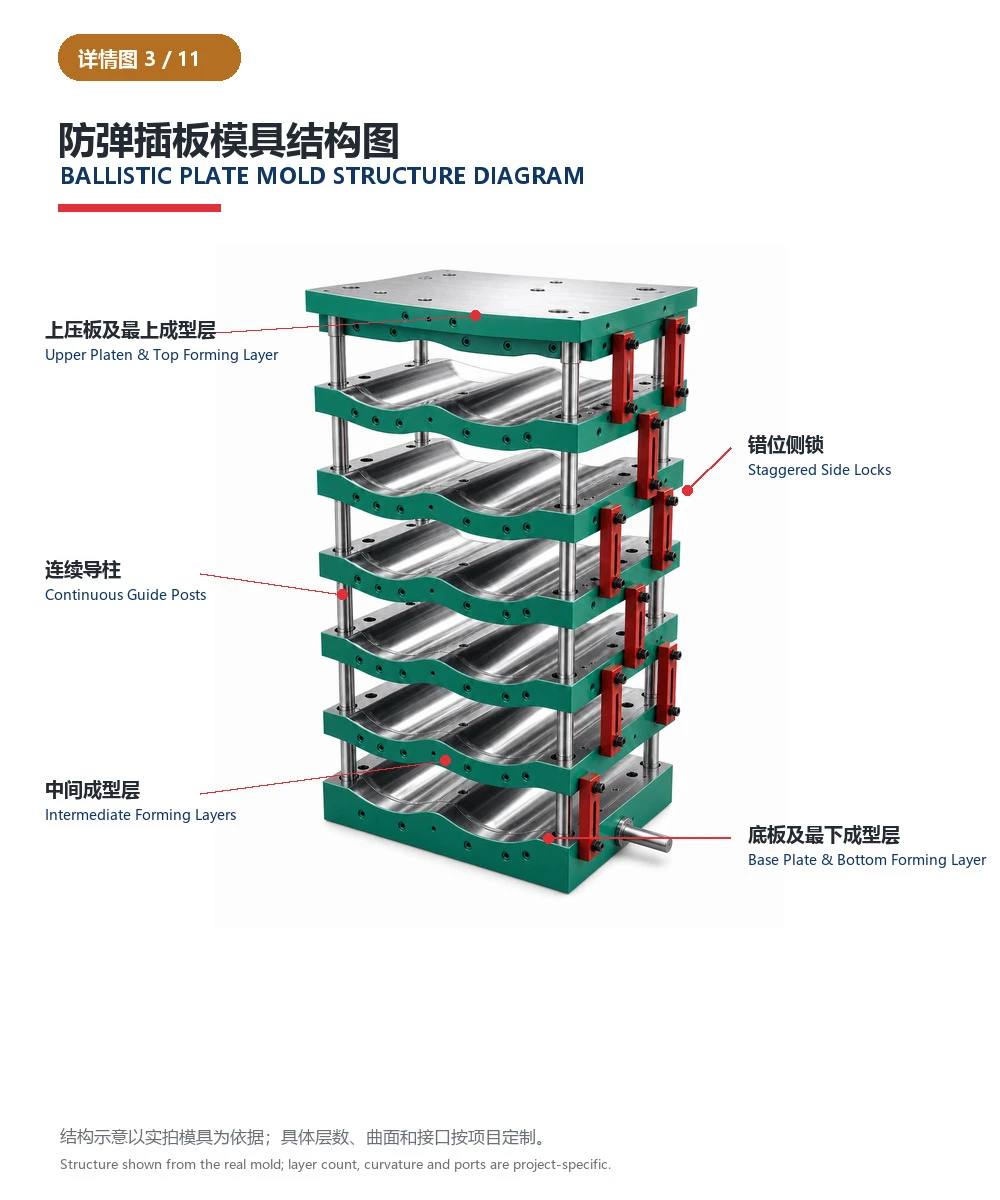
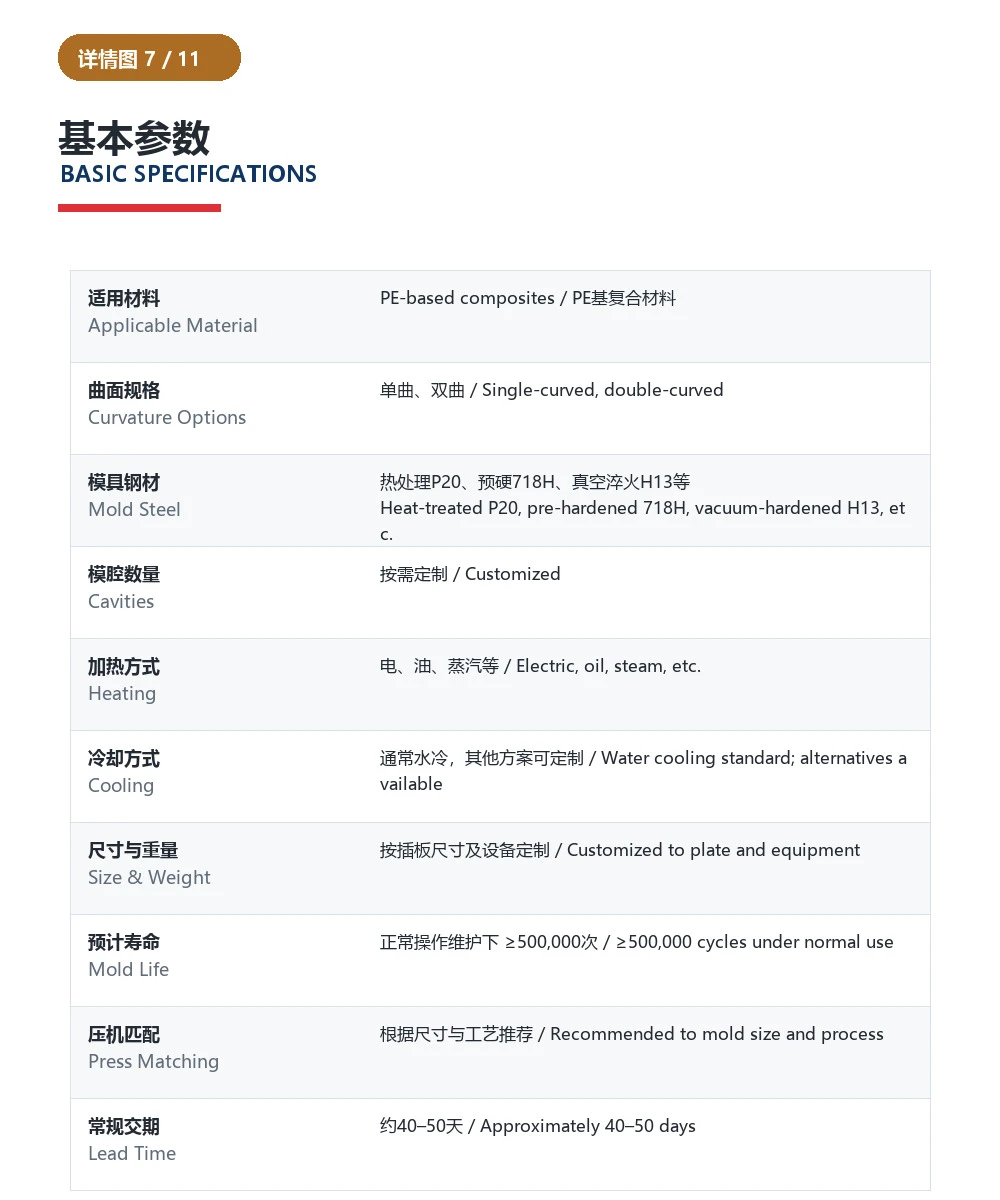
This Ballistic Plate Compression Mold uses matched forming surfaces developed for hot-press molding of composite materials and is suitable for single-curved or double-curved PE ballistic plates. The mold can be engineered from the required plate profile, curvature, dimensions, thickness, 2D drawings, 3D models, or physical samples. Cavity quantity, overall mold dimensions, and mold weight are customizable for each project.
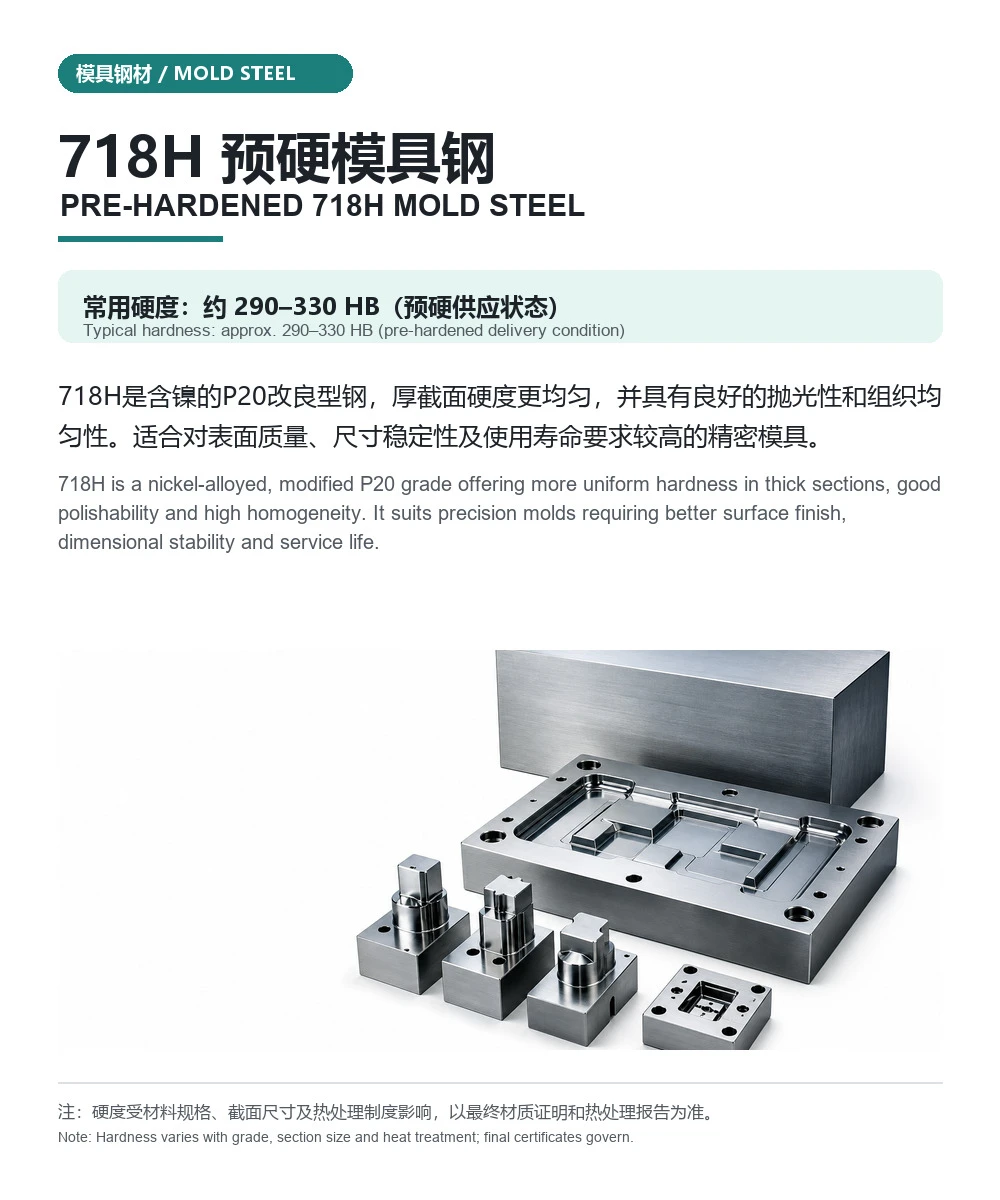
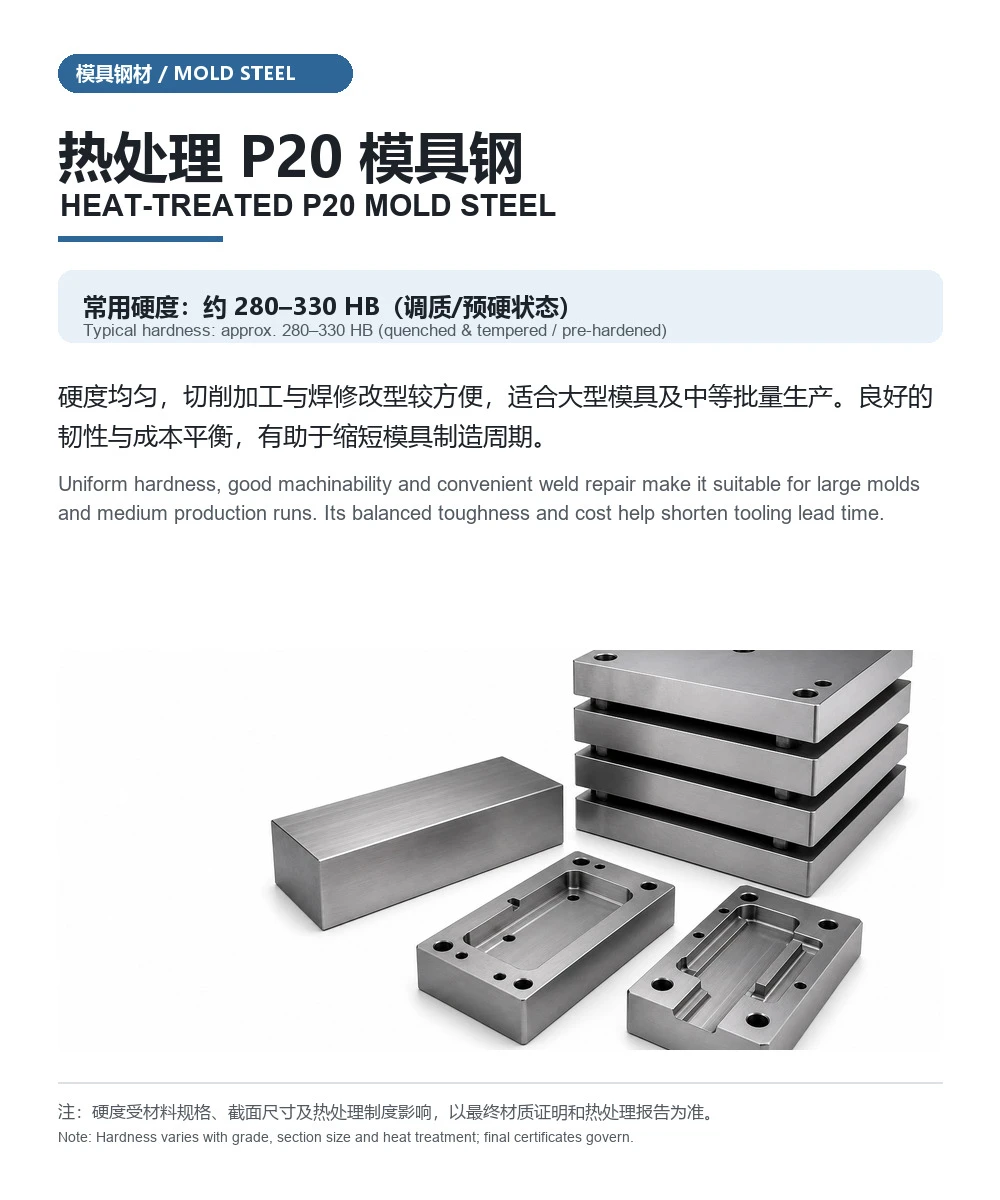
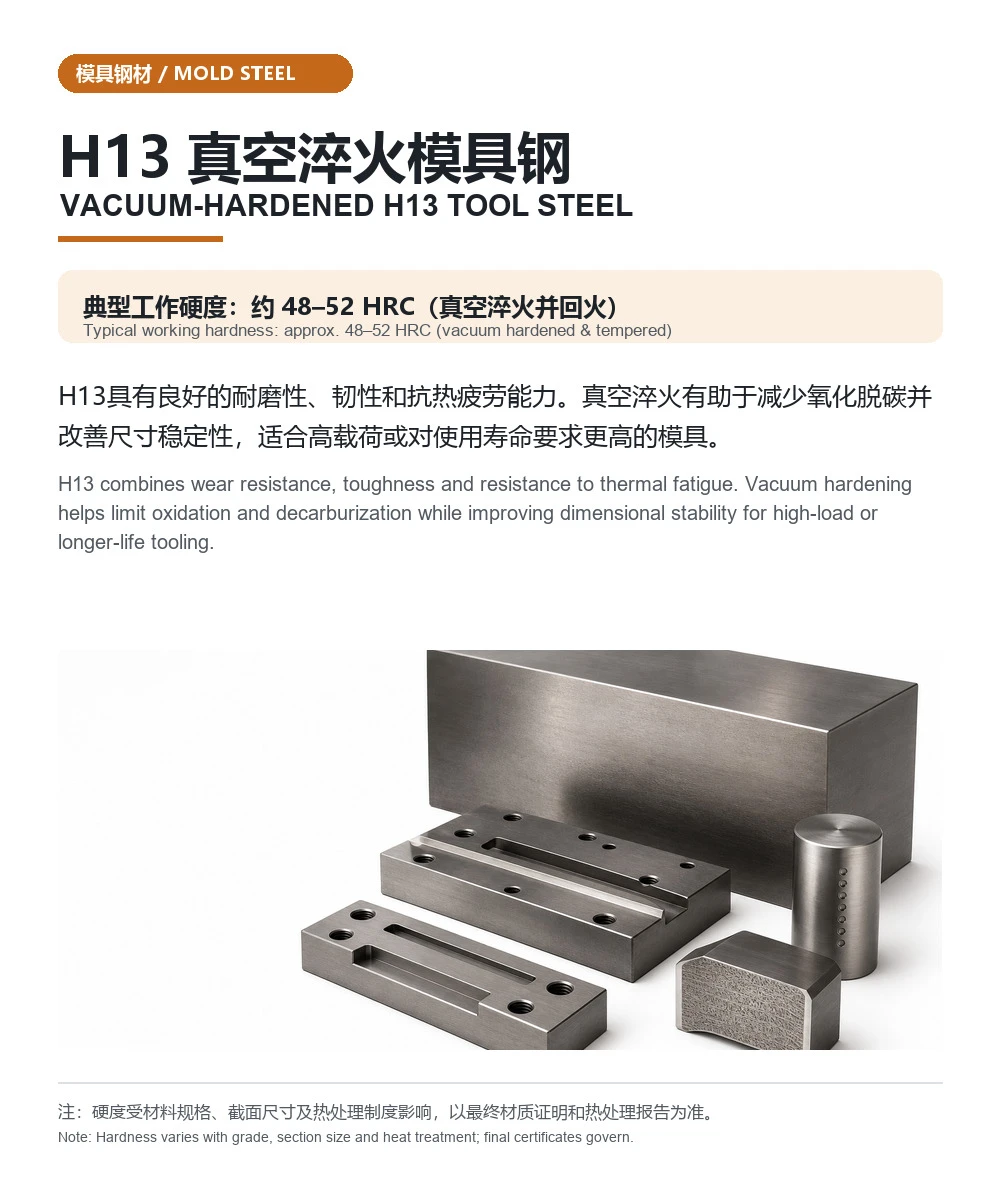
Common mold-steel options include heat-treated P20, pre-hardened 718H, vacuum-hardened H13, and other suitable grades. Alternative steels can be selected according to production volume, surface requirements, expected mold life, and project budget. Each grade offers a different balance of hardness, wear resistance, machinability, and maintenance cost, with the final solution subject to the approved technical requirements.
Electric heating, oil heating, steam heating, and other temperature-control systems are available. Water cooling is commonly used, while alternative solutions can be customized according to the PE composite system, hot-press cycle, and production equipment to support uniform mold-surface temperature and stable forming.
Under normal operating and maintenance conditions, the Ballistic Plate Mold is expected to achieve at least 500,000 molding cycles. Actual service life depends on steel grade, heat-treatment quality, material system, molding temperature and pressure, cleaning, maintenance, and operating practices.
Suitable press parameters can be recommended according to mold dimensions, weight, effective projected area, and molding process. Typical lead time is approximately 40–50 days, subject to design approval, project complexity, and the formal order. The mold controls product geometry and forming conditions; the protection rating of the finished plate must be verified through the customer's selected materials, construction, process, and testing to applicable standards.
Application Scenarios
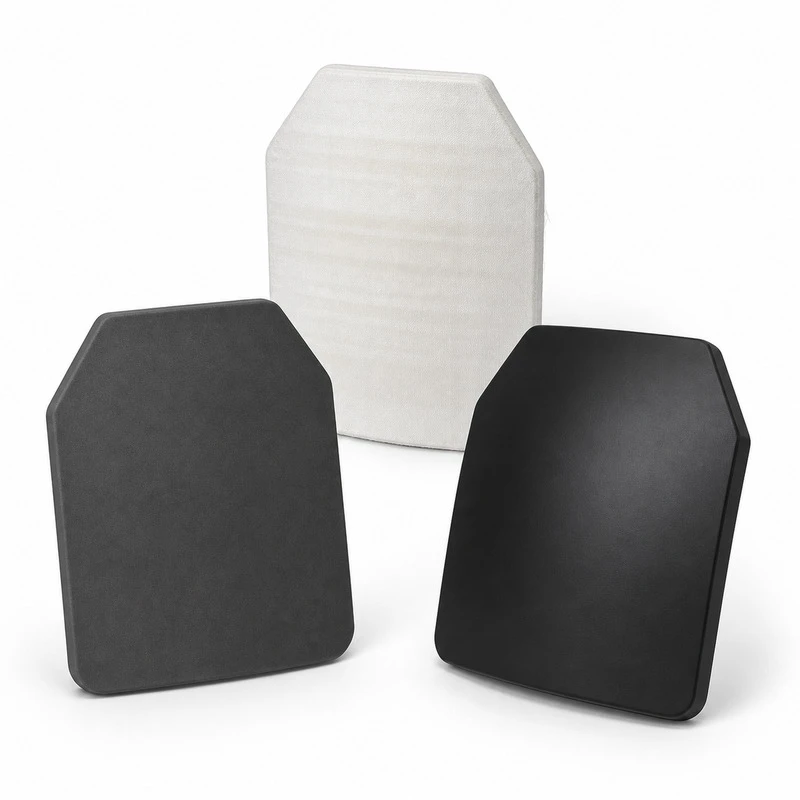
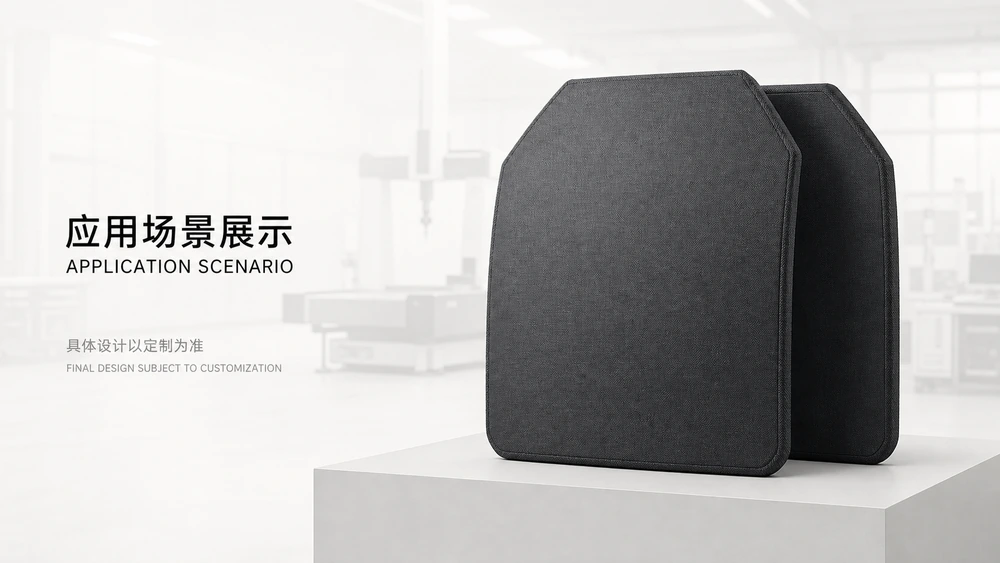
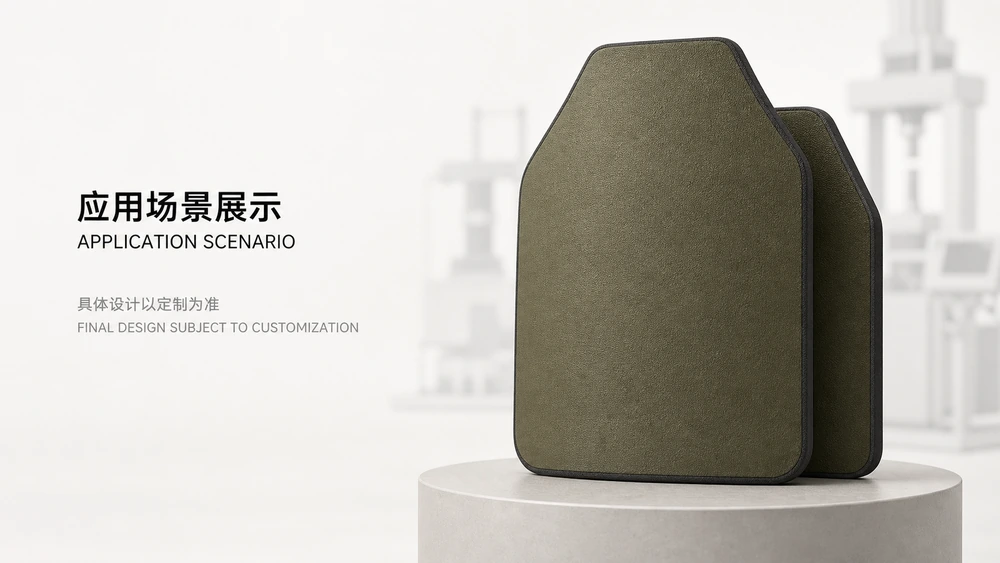
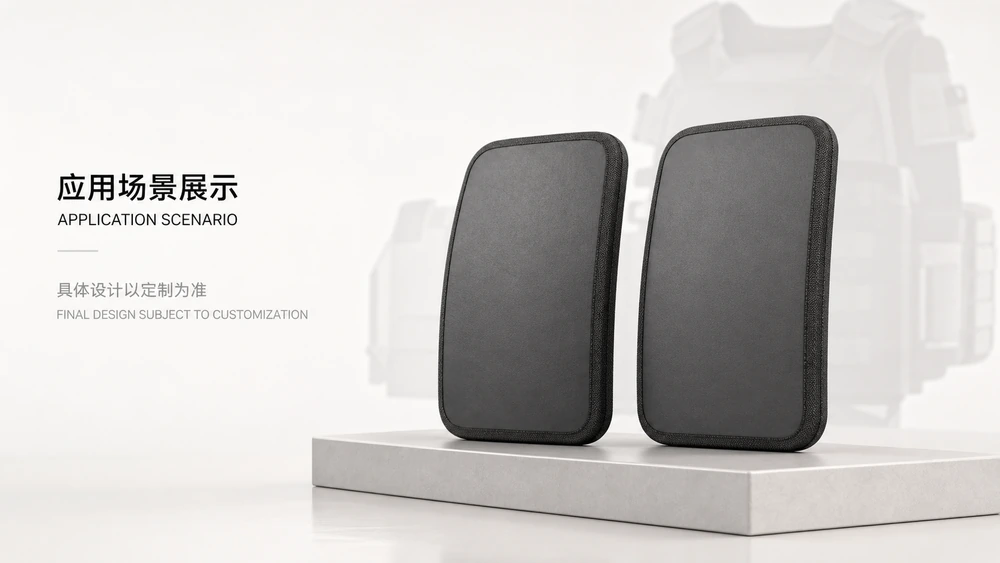
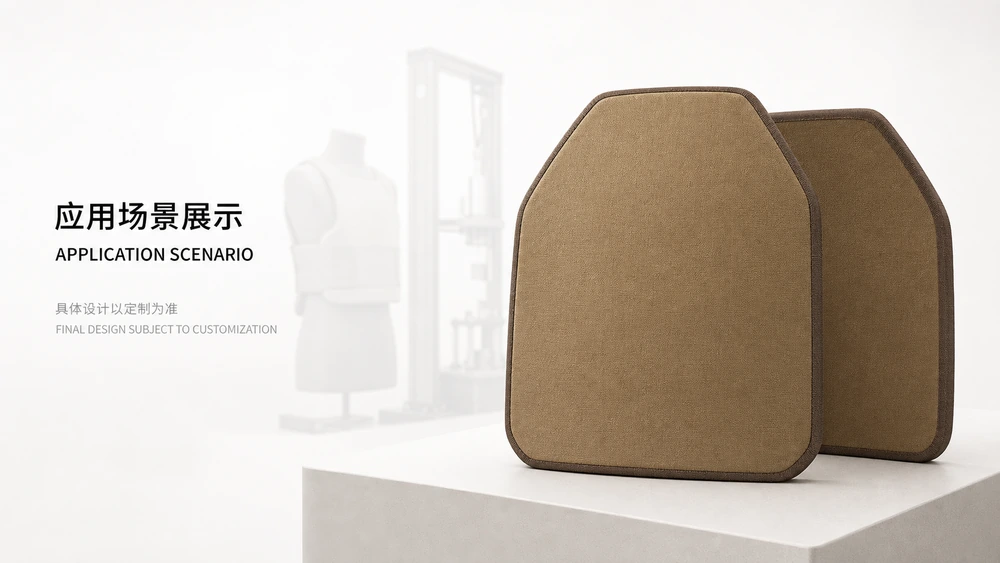
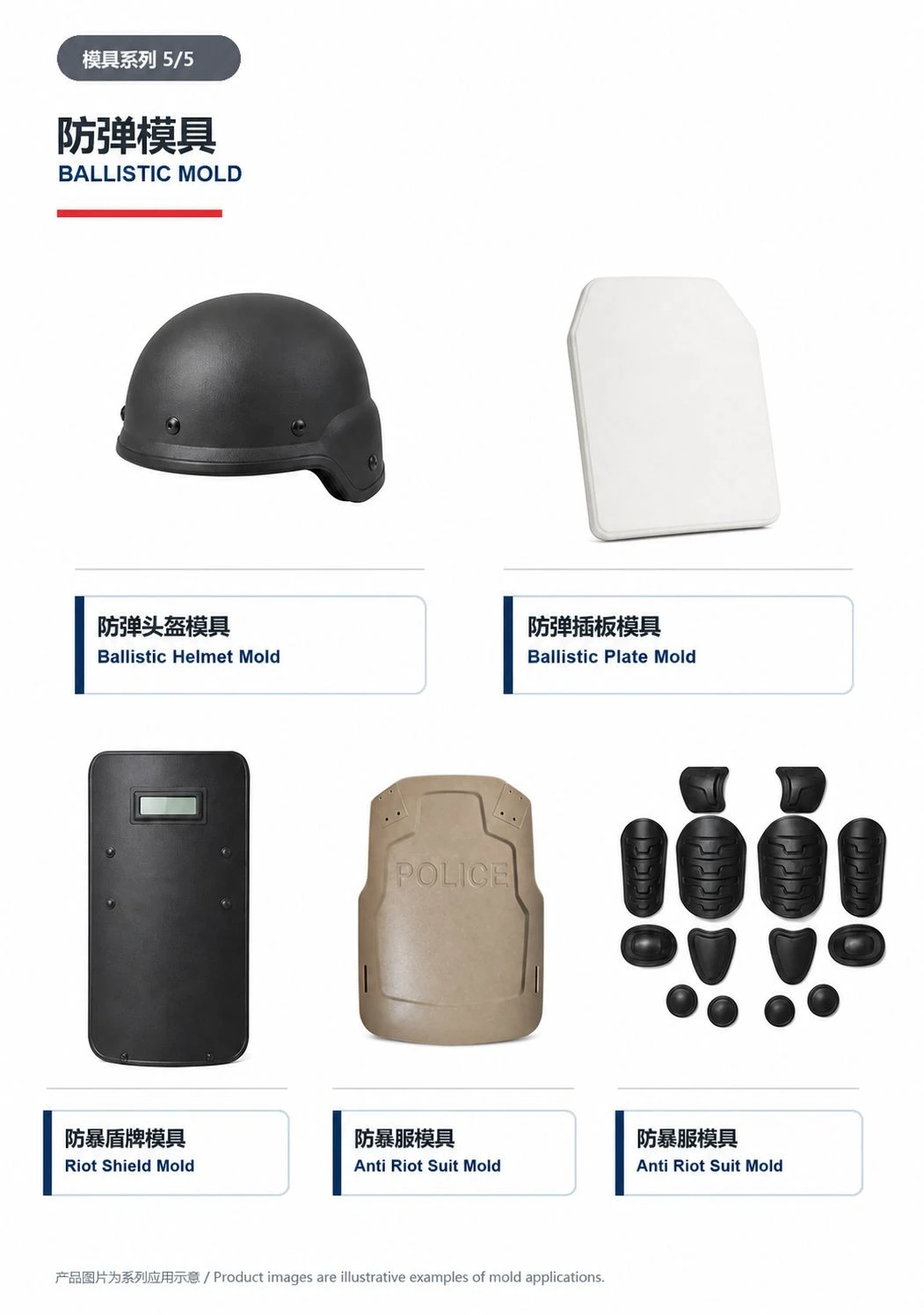
Ballistic Plate Molds are used for hot-press forming of PE-based composite plates for military and law-enforcement protection, body-armor inserts, tactical equipment, and other personal-protection applications. Single-curved and double-curved forming surfaces can be developed according to the required fit, plate dimensions, and structural design, supporting prototype development, small-batch trials, and volume production.
Properly designed forming curvature, guiding components, heating, and cooling systems help control product geometry, thickness consistency, and process stability. Final protective performance depends on material grade, lay-up construction, molding process, and compliant testing; the mold itself does not represent or guarantee a specific ballistic rating.
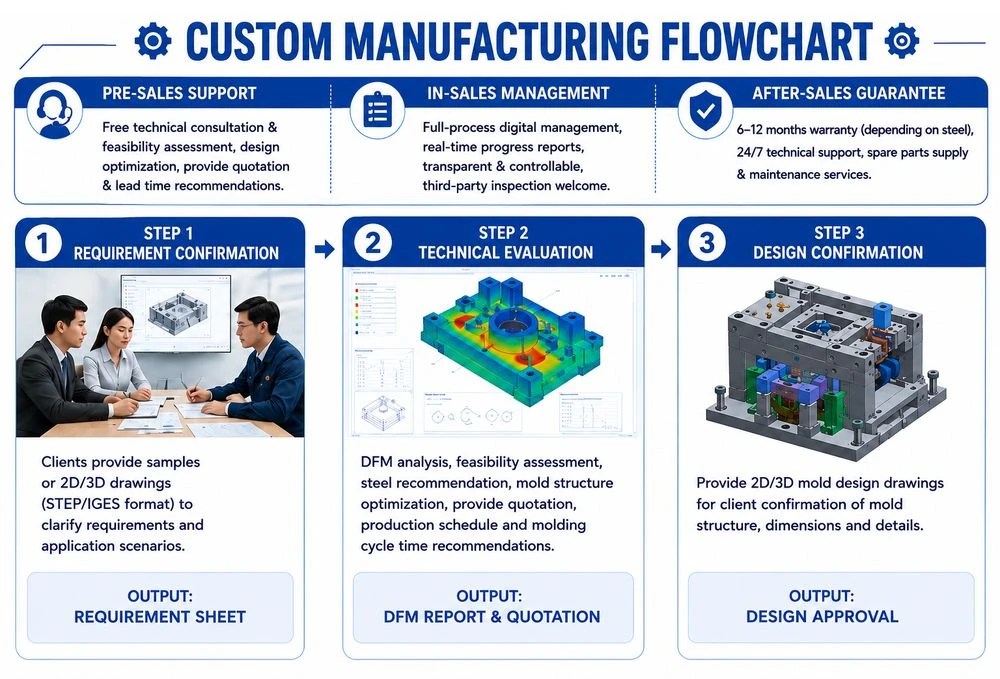
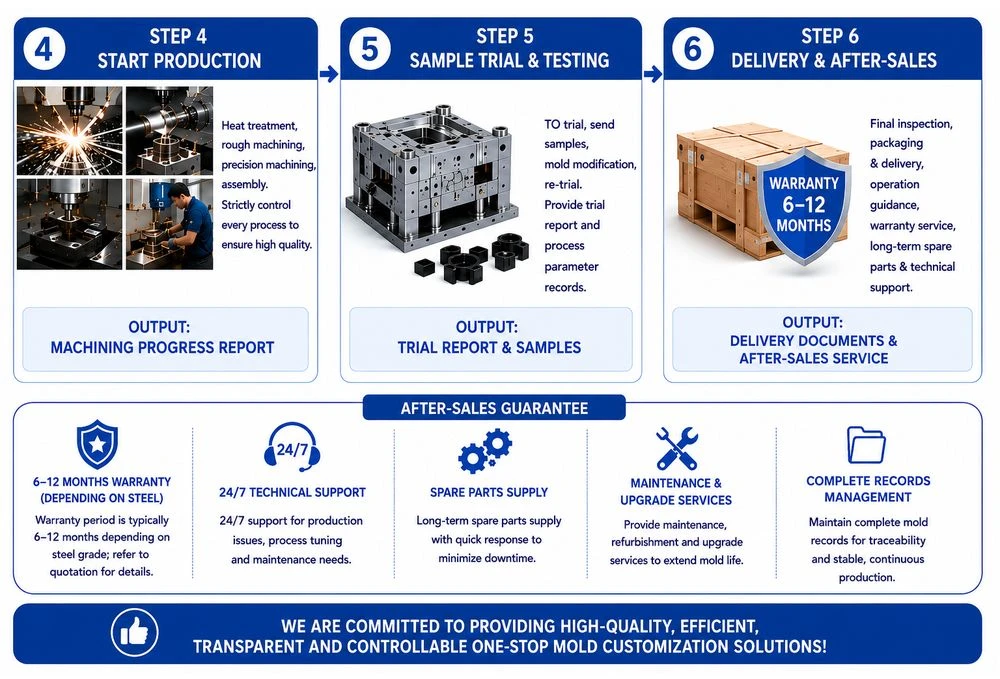
Mold Customization Process
Requirement Confirmation
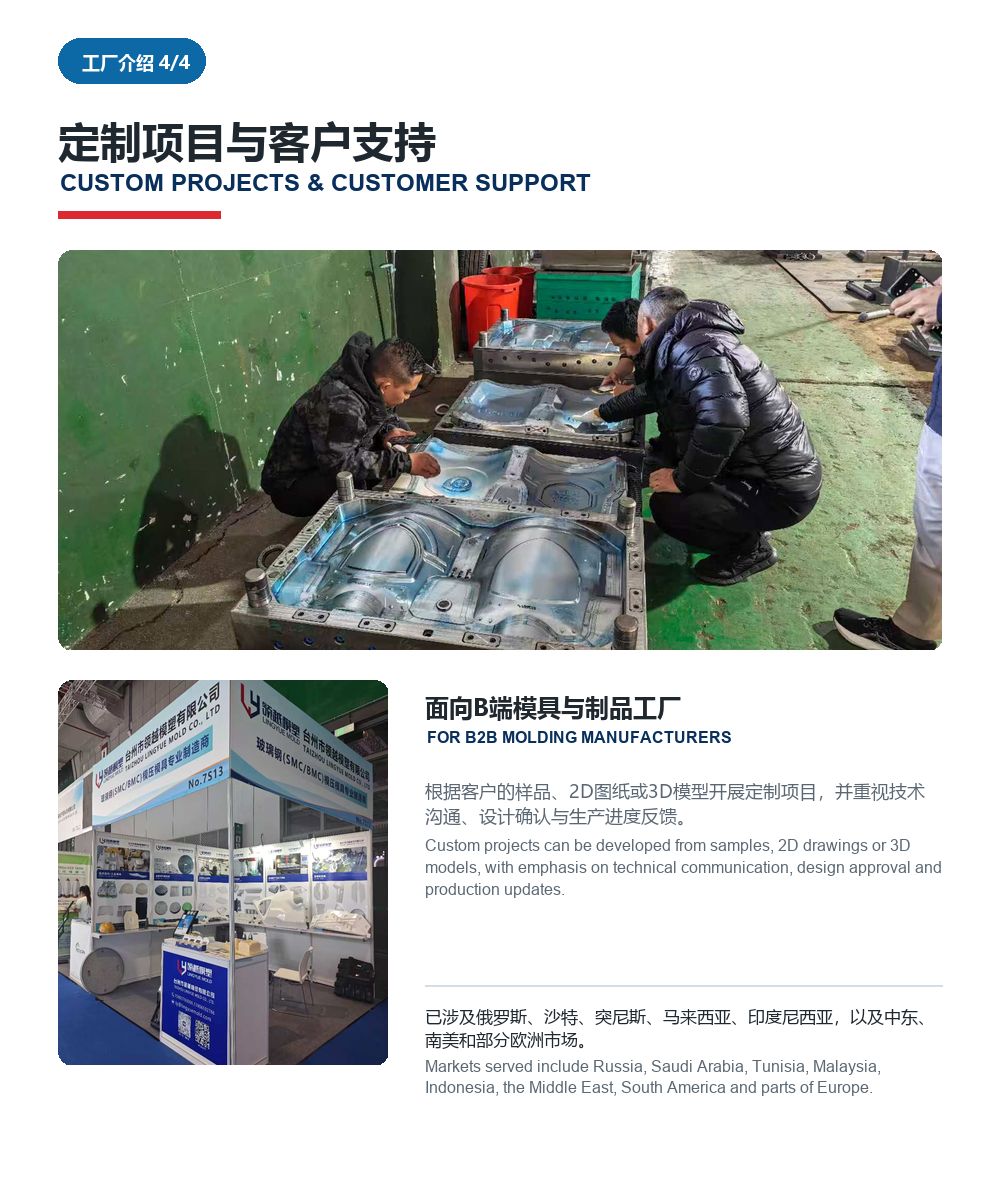
The customer supplies samples, 2D drawings, or 3D models and confirms the material, curvature, dimensions, and equipment conditions.
Technical Evaluation
DFM review, steel and temperature-control recommendations, and press-matching evaluation.
Design Approval
Mold structure and key dimensions are submitted for customer approval.
Manufacturing
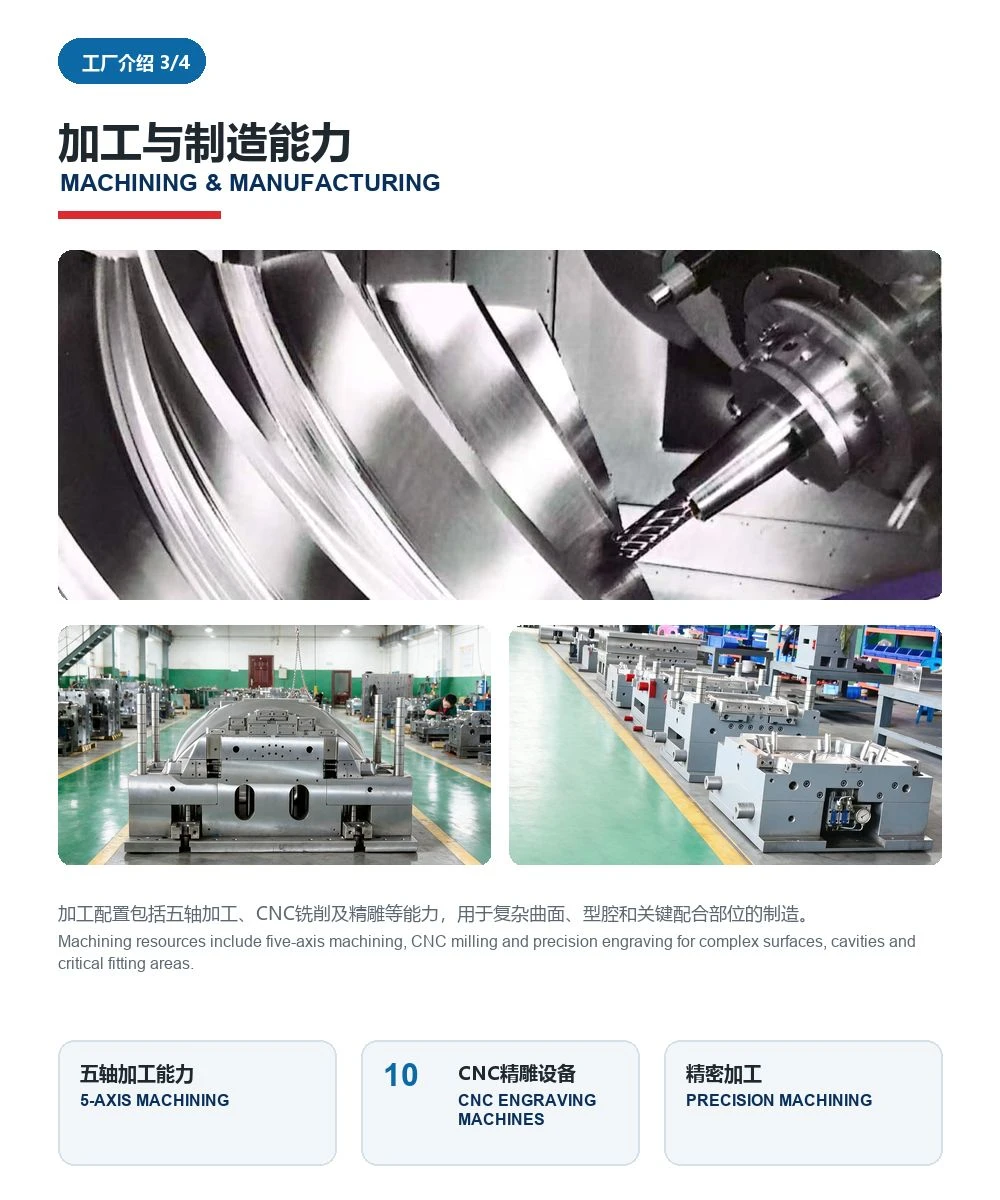
Material preparation, heat treatment, rough machining, precision machining, assembly, and quality control.
Mold Trial and Adjustment
Trial molding is conducted with the confirmed material, with process parameters recorded and optimized as required.
Delivery & After-Sales
Final inspection, packaging, delivery, operating guidance, spare parts, and technical support.
Factory Introduction
FAQ
Q: How do I choose between a single-curved and double-curved PE ballistic plate mold?
A: A single-curved mold mainly controls curvature in one direction, while a double-curved mold controls both transverse and longitudinal curvature for improved body fit. The selection should be based on the plate's 3D data, target dimensions, lay-up construction, and application requirements.
Q: What pressing force is required for hot-press molding ballistic plates?
A: Required force depends on the plate's effective area, PE material system, lay-up thickness, and process window. Press selection should be calculated from the effective projected area and target unit pressure, with a suitable equipment safety margin.
Q: Which heating methods can be used for a ballistic plate mold?
A: Common options include electric, oil, and steam heating. The system should be selected according to target temperature, heating rate, temperature uniformity, plant utilities, and maintenance requirements, with zoned temperature control available when needed.
Q: How can temperature uniformity be improved in a ballistic plate mold?
A: Heating zones, temperature sensors, and cooling circuits should be arranged to reduce thermal differences across the forming surface. Multi-point temperature measurements during mold trials can be used to adjust zone power or medium flow.
Q: What causes uneven thickness in molded PE ballistic plates?
A: Common causes include inconsistent lay-up weight or positioning, forming-surface alignment errors, uneven pressure distribution, material movement, and temperature differences. Check the preform, mold-matching surfaces, press parallelism, and process settings separately.
Q: How can wrinkles or material displacement be reduced during plate molding?
A: Check ply dimensions, lay-up orientation, preform positioning, and mold-closing speed. Optimizing preform retention, mold closure, and the pressure ramp can help reduce material movement and local accumulation.
Q: Why is venting important in a ballistic plate compression mold?
A: Air trapped between layers and gases generated during molding may cause voids, surface defects, or insufficient local consolidation. Vent locations and clearances should be designed according to material behavior, mold geometry, and trial results.
Q: At what temperature should a PE ballistic plate be demolded?
A: Demolding temperature should follow the PE material supplier's process window, plate thickness, and cooling conditions. Opening the mold too early may cause springback or deformation, so the plate should reach sufficient dimensional stability first.
Q: How can springback be reduced after molding a ballistic plate?
A: Optimization may involve surface compensation, cooling time under pressure, temperature uniformity, lay-up construction, and demolding conditions. Compensation must be determined from material data and trial results rather than a universal fixed value.
Q: What is the function of water cooling in a ballistic plate mold?
A: Water cooling can shorten the cooling stage and improve cooling consistency across different areas. Circuit design should prevent insufficient flow, local scale buildup, and excessive inlet-to-outlet temperature differences, with regular checks for leakage and blockage.
Q: What should be checked when a ballistic plate sticks to the mold?
A: Check forming-surface cleanliness, surface finish, release-agent application, demolding temperature, and material flash. Avoid using hard tools that may scratch precision-machined surfaces.
Q: How often should a ballistic plate mold be maintained?
A: Maintenance frequency depends on production rate, material residue, temperature, pressure, and the working environment. Use a cycle-based inspection record and regularly check forming surfaces, guides, fasteners, heaters, sensors, and cooling circuits.
Q: Must molding parameters be adjusted when changing the PE material?
A: Yes. Different PE materials may have different softening, consolidation, holding, and cooling windows. Temperature, pressure, time, and demolding conditions should be revalidated using the material supplier's data.
Q: Can one mold produce ballistic plates in different sizes?
A: Different profiles, curvatures, or boundary dimensions usually require interchangeable forming inserts or separate molds. Whether a common mold base can be used should be evaluated during design according to size differences, loading, and temperature-control layout.
Q: Can the mold guarantee a specific ballistic protection level?
A: No. The mold controls product geometry and forming conditions, while the final protection level depends on PE material grade, lay-up construction, thickness, process stability, and testing to the applicable standard.
Hot Tags: ballistic plate mold, China ballistic plate mold manufacturers, suppliers, factory


