


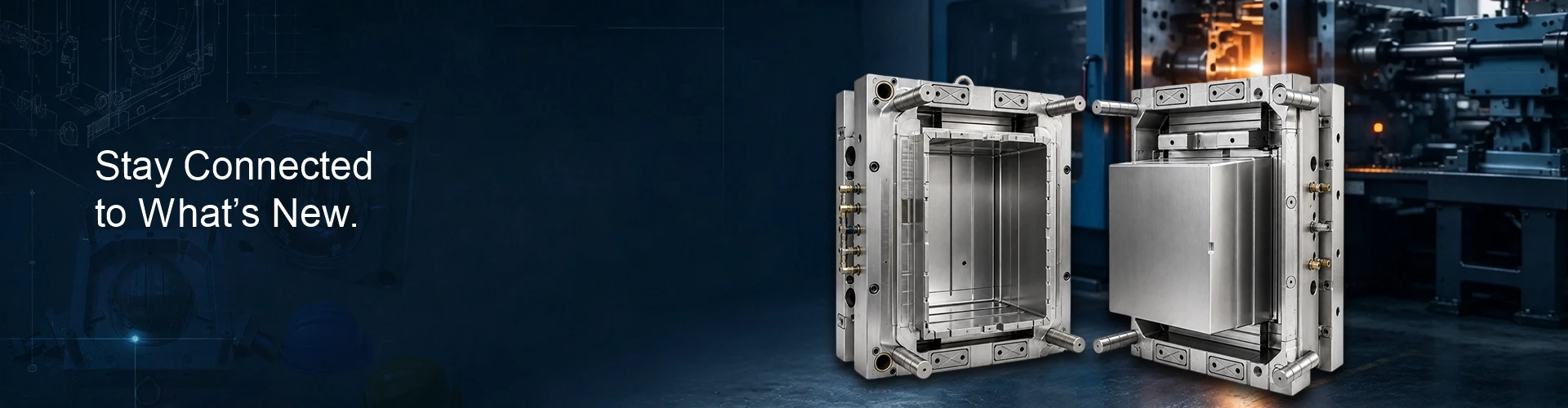
As the manufacturing industry transitions toward high-end and eco-friendly operations, injection molds are continuously evolving, exhibiting three major trends:
1. Precision: Meeting High-End Manufacturing Demands
Increasingly stringent precision requirements in sectors such as consumer electronics, medical devices, and aerospace are driving mold technology toward "ultra-precision":
Machining precision is advancing from ±0.01mm to ±0.001mm, enabled by technologies such as slow-feeding wire-cut EDM and nano-polishing;
Micro-mold cavity dimensions can be as small as 0.05mm, meeting the molding needs for components like micro-sensors and medical microfluidic chips.
2. Sustainability: Addressing Environmental and Green Manufacturing Needs
Material Recycling: Mold designs incorporate detachable structures to facilitate steel recovery at the end of the mold's life; when using recycled plastics, mold cavities are optimized for wear resistance to minimize waste generation;
Energy-Efficient Design: Optimizing cooling channels and venting systems reduces the energy consumption of injection molding machines; for instance, molds with conformal cooling channels can cut cooling water consumption by 20%.
3. Intelligence: Integrating Digital and Manufacturing Technologies
Digital Twins: Creating digital models of molds in virtual environments to simulate the molding process and optimize structures beforehand, thereby reducing the number of mold trials (cutting trials from the traditional 3–5 rounds down to 1–2);
IoT and Predictive Maintenance: Embedding sensors in molds to collect real-time data on temperature, pressure, and vibration; AI algorithms then predict potential failures-such as ejector pin wear-to prevent unexpected downtime;
Automation Integration: Linking molds with robots and visual inspection systems to enable automatic demolding, inspection, and mold adjustment, thereby reducing manual intervention and enhancing production stability.