


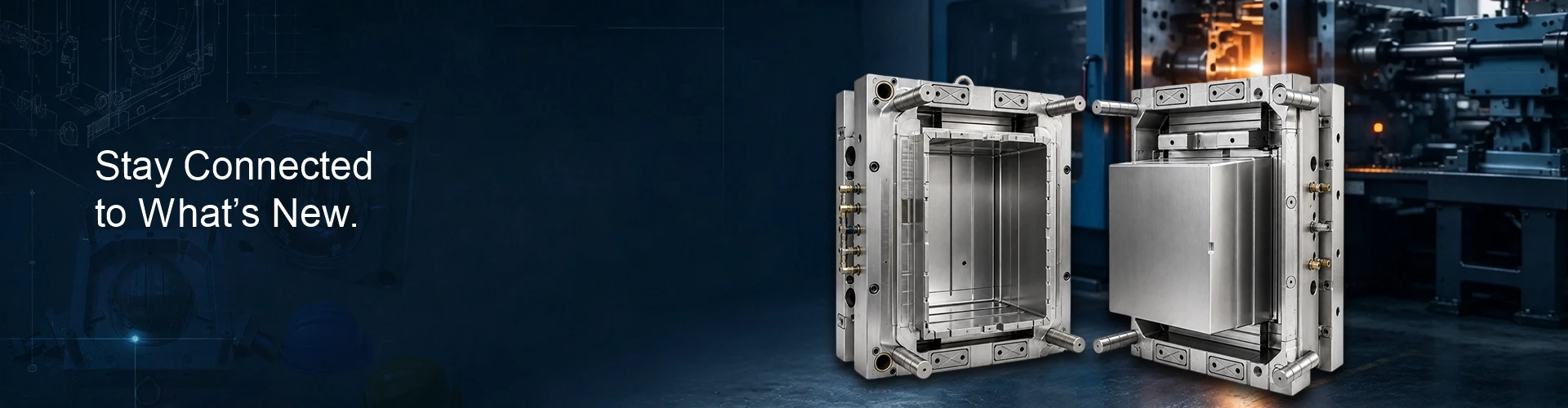
Mold Manufacturing Process: The manufacturing process requires high-precision machining equipment and advanced techniques. Grinding is employed to ensure the flatness and surface finish of the mold, with flatness errors controlled within ±0.002 mm. Furthermore, upon completion, the mold undergoes rigorous inspection and adjustment to verify that its precision and dimensions meet design specifications; trial molding is conducted to optimize and refine the mold, ensuring it meets the requirements of precision injection molding production.
Mold Temperature Control: Precision injection molding requires that fluctuations in mold cavity surface temperature be controlled within ±1°C. For semicrystalline plastics-such as polyethylene (PE) and polypropylene (PP)-higher mold temperatures promote uniform crystallization, thereby enhancing the dimensional stability and mechanical properties of the finished parts; however, excessively high temperatures can prolong cooling times and reduce production efficiency. For amorphous plastics-such as polystyrene (PS) and polymethyl methacrylate (PMMA)-mold temperature primarily influences melt flow (mold filling) and cooling rates; an appropriate temperature ensures a smooth surface finish and minimizes internal stresses. Mold temperature is precisely maintained within the optimal range using heating or cooling systems, such as electric heating rods or circulating water cooling.