


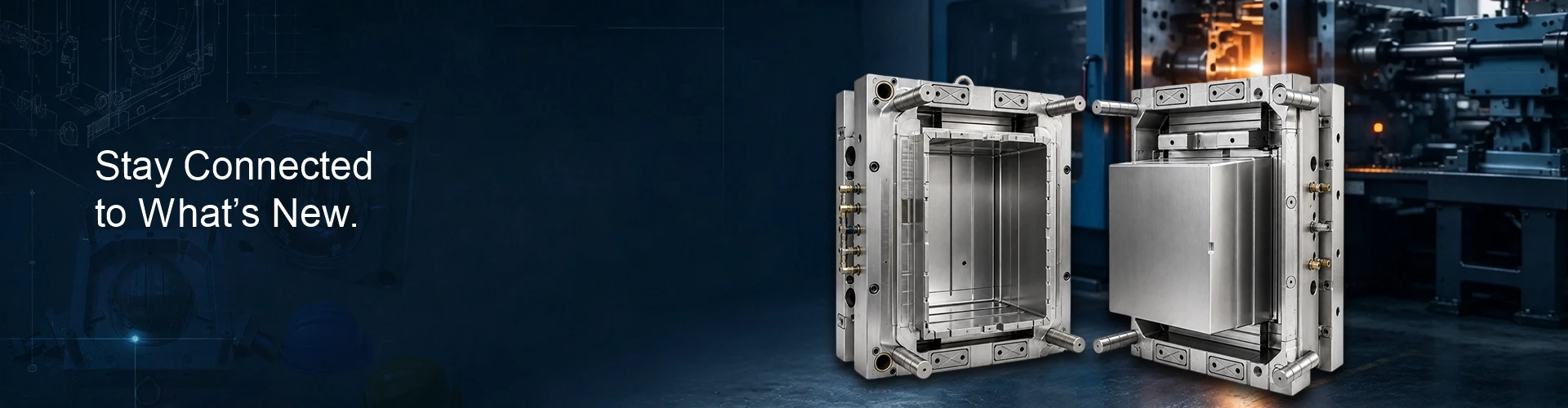
The mold demands rigorous precision, relying on high dimensional accuracy of the cavities, precise positioning, and strict adherence to parting-line tolerances.
The structural design requires high rigidity; the number of cavities should be limited, and components such as base plates, support plates, and cavity walls must be thickened to prevent significant elastic deformation under high temperatures and pressures.
Design priorities include ease of demolding; this is achieved by using fewer cavities, minimizing runner length and complexity, and ensuring superior surface finishes compared to standard molds.
Mold materials consist of high-strength alloy steels subjected to rigorous heat treatment to achieve high hardness (approximately HRC 52 for molding components), excellent wear resistance, and strong corrosion resistance.
Manufacturing employs advanced processes-such as CNC machining for micron-level positioning and electrical discharge machining (EDM) for complex geometries-to ensure precision and surface quality.
Operating conditions are demanding; high-pressure, high-speed injection subjects the cavities to intense erosion and friction, typically necessitating maintenance or replacement after tens to hundreds of thousands of injection cycles.
Mold costs are high, driven by factors such as specialized design, high-precision manufacturing equipment, and premium materials.